An ecological data hypermarket?

For the past five years, I have led SoilTemp, the global database of microclimate data. I have witnessed its evolution from humble beginnings to a robust repository housing close to a 100,000 microclimate time series from around the world, several of which are linked to vegetation data from the same locations.

As the database has grown, so too has the variety of use cases. Researchers across microclimate studies, ecology, and beyond are increasingly reaching out to use all that data for a variety of needs. Many, for example, aim to connect in-situ microclimate data from SoilTemp to vegetation data to assess the buffering effects of vegetation or to explore how species distributions are influenced by microclimate.

But what if we could simplify this connection between the two? Currently, data contributors must format and upload their vegetation data to our database, creating redundancy when the same data exists in other databases. This reformatting leads to unnecessary duplication of effort.

Ideally, we wouldn’t need to reformat and resubmit vegetation data stored elsewhere; instead, we could directly access and extract it from those databases themselves!

That is my new BIG dream: to create a way to link existing ecological databases together for easy querying. For example, if I want temperature data from Dutch forests along with vegetation data from the same locations, I envision selecting coordinates and associated parameters on an online dashboard and sending requests to both SoilTemp and any open-access vegetation database that shares the same location. Or if I wish to model the impact of microclimate on root traits, I could reach out to a connected trait database for relevant data from nearby locations.

Wouldn’t that be incredible? I envision a nice and friendly user interface – an RShiny-app perhaps – where users could select locations and receive a list of ecological parameters stored in various open-access databases. These parameters could be from the exact same location, linked by their location name, or from a location nearby, sharing similar coordinates.

So, who’s with me in making this a reality? Are there database managers interested in collaborating on such a ‘SpiderWeb of Ecological Databases’ (SWED)? Or does a similar framework already exist, and we should simply connect SoilTemp to it? (Even better!)

We have some ideas on how to make this happen, but I want to hear from you first! Do you think this would be useful? What features should this imagined ‘SWED’ include? Am I reinventing the wheel, or is this concept as timely as I believe? Please share your thoughts!

Posted in General, Science | Tagged , , , , , , , , , , , , | Leave a comment

Throwback to MEB2024

The last week of August was marked in red and bold on many calendars: it was the week of the Microclimate Ecology & Biogeography conference, undoubtedly the most important event of the year for global microclimate research.

The conference started with a much-appreciated excursion to the lakes, forests and rocks of southern Finland

After this second edition—equally interesting, important, and inspiring as the first one—it’s safe to say that ‘MEB’ has become a tradition. From now on, every two years, the microclimate community will gather for a week of cutting-edge presentations, exhilarating discussions, and simply to enjoy each other’s company. And we’ll all return home better equipped to do even better science.

This blog post is to reflect on the science discussed: what has ME&B 2024 taught me about the state of our field? What have we learned since the last conference, and where are we heading next? Here are a few observations, loosely connected, but hopefully enough to spark inspiration!

Modelling Mayhem

First, and perhaps most significantly: there’s so much exciting progress in modelling! In both of the main categories—mechanistic and correlative models—things are moving rapidly. Mechanistic models are becoming faster, easier to use, more versatile, and more ambitious by the day, zooming in on specific organisms and scaling up to cover larger spatiotemporal extents. Riding the wave of increased computing power, possibilities are emerging that seemed far-fetched only a couple of years ago.

Michael Kearney’s keynote lecture highlighted the great things that can be done with mechanistic microclimate models

But correlative models are keeping pace. Particularly in machine learning, the conference showcased a wide array of new applications, many bigger, better, and bolder than before. Deep learning, for instance, has entered the fray, enabling analyses on increasingly larger datasets. This has finally opened the door to modelling the microclimates of the past and future, moving us closer to answering the biggest question of all: how fast is the microclimate changing?

The city of Helsinki was the perfect backdrop for a week of science and networking

Data, data, data!

The flow of microclimate data shows no signs of slowing down, either. We’re gathering bigger datasets, from more remote areas, and compiling them more efficiently (thank you, SoilTemp!). Smarter survey designs are helping us understand the globe’s microclimate in greater detail. I’m particularly happy to see increased standardization (thank you, TOMST!), but at the same time, creativity is flourishing. Take, for example, the fiber optic cable that measures temperature every 5 centimeters or so along its 50-meter length—such innovation is amazing to see.

The cute botanical garden of Helsinki, a must-see for any self-respecting plant ecologist, of course!

We’re also becoming more careful with our sensor data, engaging in important discussions about what we’re actually measuring with a particular sensor, and how to make those measurements more relevant to the organisms we’re studying. We’re moving beyond simply acknowledging that things are complicated; we’re working on solutions and standardization.

From European forests to the globe

Global microclimate community? Absolutely. While European forest research clearly still leads the way, other regions and ecosystems are catching up. Tropical forests, for example, are gaining more in-situ sensors, fostering an increasingly vibrant research community and – as a result – a deepening understanding of those ecosystems.

But we went far beyond that at ME&B. The conference also saw the launch of a new Arctic, Antarctic, and Alpine subsection, uniting cold-climate enthusiasts to bring our knowledge of these regions up to par with that of forests. We also witnessed perhaps the very first freshwater microclimate presentations, tentatively bridging the gap between terrestrial and aquatic microclimate research—fields with many parallels but just as many divergences. Drylands, urban areas, peatlands and more were represented, showcasing that each ecosystem needs its own perspective to tackle microclimate issues.

Of course, SoilTemp oversees all of this with a smile, and in the next two years, we’ll work on strengthening these diverse subfields and their interactions even further.

A growing community

Lastly, and perhaps the most heartening development: the microclimate community is coming together like never before. Collaborations are springing up everywhere, and endless enthusiastic conversations about research—over coffee, beer, blueberry juice, or vegetarian curry—fuel the spirit of the conference. Let’s keep those conversations going, as they are what keep us going!

Thanks, team Helsinki, for a fabulous conference!

Miska Luoto, one of the Finnish organizers, showing us his beloved Finland
Posted in General | Tagged , , , , , | Leave a comment

A workflow for collaborative writing

With MEB2024 just around the corner, it’s the perfect moment to shine a light on a hidden gem that holds a special place in my heart.

But first, what exactly is MEB2024? The second ‘Microclimate Ecology & Biogeography’ conference is the fulfillment of one of our founding dreams at the SoilTemp network: to create a global community of microclimate researchers, all learning from each other. The inaugural conference in 2022 brought over a hundred brilliant minds to Antwerp, Belgium. Now, as we prepare for the second edition in Helsinki, with a similarly strong turnout, this conference has already established itself as a cornerstone event in our field – if I may say so myself.

For those who joined us at MEB2022 in Antwerp, you’ll surely agree that it was a week brimming with excitement and groundbreaking ideas for the future of microclimate science. It felt like we were on the brink of something transformative—a pivotal moment in the global rise of microclimate ecology and biogeography.

Inspired by that vibrant atmosphere, we decided to capture the essence of the conference in writing. That’s how the idea for a keystone paper on microclimate was born. But we didn’t stop there; we took a perhaps slightly unconventional approach: inviting every single conference participant to co-author the piece. It might sound crazy—writing a perspective paper with over a hundred authors—but it felt as the right thing to do. The concept was undeniably born from the collective energy of the conference, and the ideas we aimed to distill into the paper were shaped by the presentations, conversations, and debates we shared over coffee and lunch with all participants. It was simply not possible to draw a line!

Figure 1 of ‘Kemppinen et al.’:  Microclimate investigations in ecology and biogeography. The conceptual figure highlights that microclimate is the link between macroclimate and the ecophysiology of organisms.

This ambitious project was guided by the incredible Julia Kemppinen, whose leadership turned our vision into reality. Her expertise ensured that, while – of course – not everyone could contribute equally, many if not most co-authors played significant roles in shaping the manuscript, making each contributor feel that their input was valuable.

Author demographics of our collaborative mastodont

Beyond its importance to the field of microclimate research, this collaborative effort stands as a testament to what can be achieved when a community comes together. Because this process was so rewarding, we wanted to share our experience as a model for others embarking on collaborative (perspective) papers. That’s why we detailed our workflow in the supplementary material—a hidden gem for those curious about our approach. These supplementary figures offer a glimpse into the collaborative journey that brought our paper to life.

First part of the route we took to make this paper a success. More information in the supplement!

So, as you dive into your next collaborative project, let our experience be your guide and inspiration!

Some outcomes of a questionnaire to the co-authors, inquiring about their experience with the paper writing process
Posted in Science | Tagged , , , , | Leave a comment

The valley where it all begon

I will never get used to the absolute beauty of this place.

Where are we? The ‘Skjomdal’, a long valley cutting through Norway, just south of Narvik. A stream, a river and a fjord, all surrounded by stunning mountains.

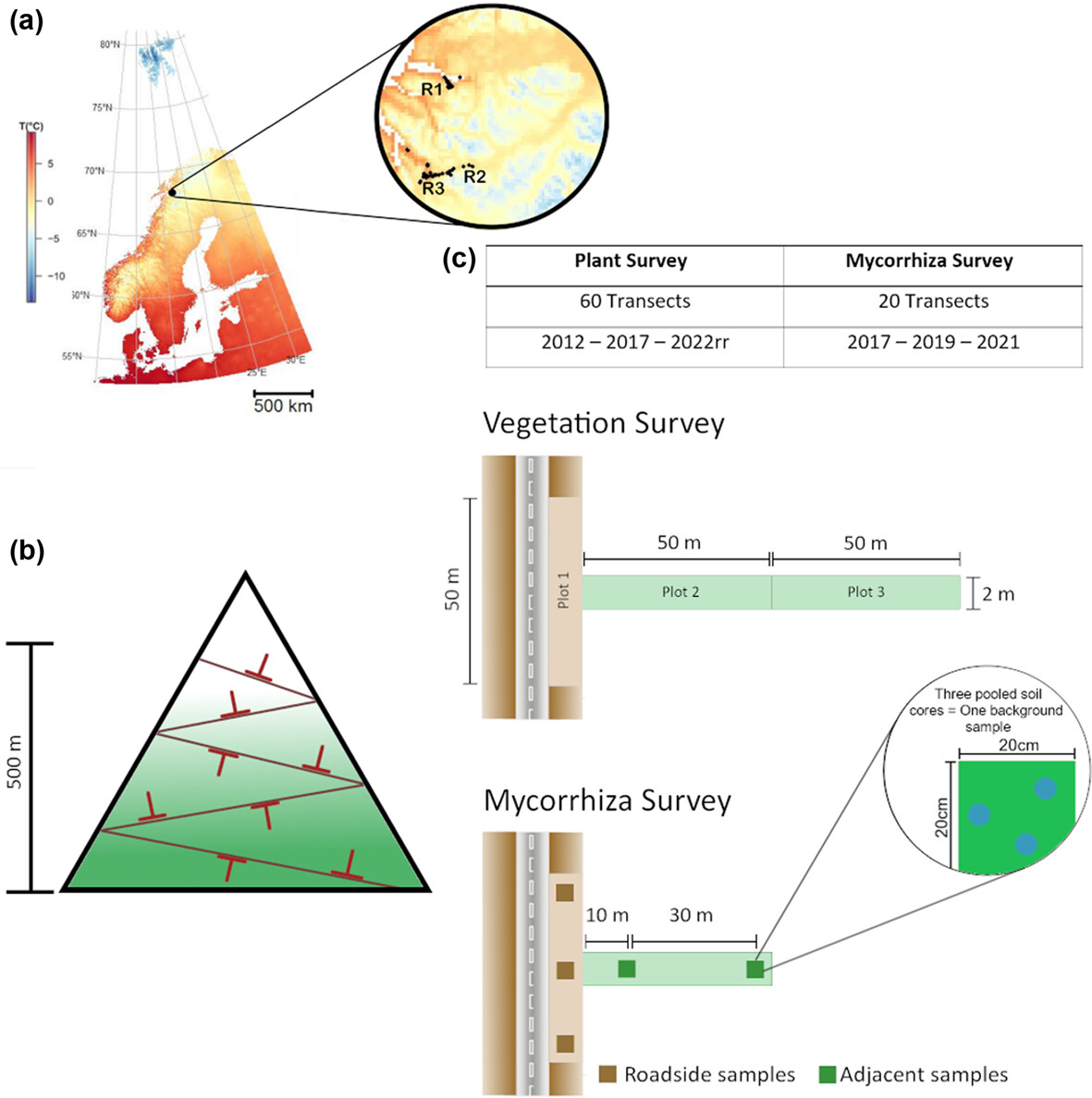
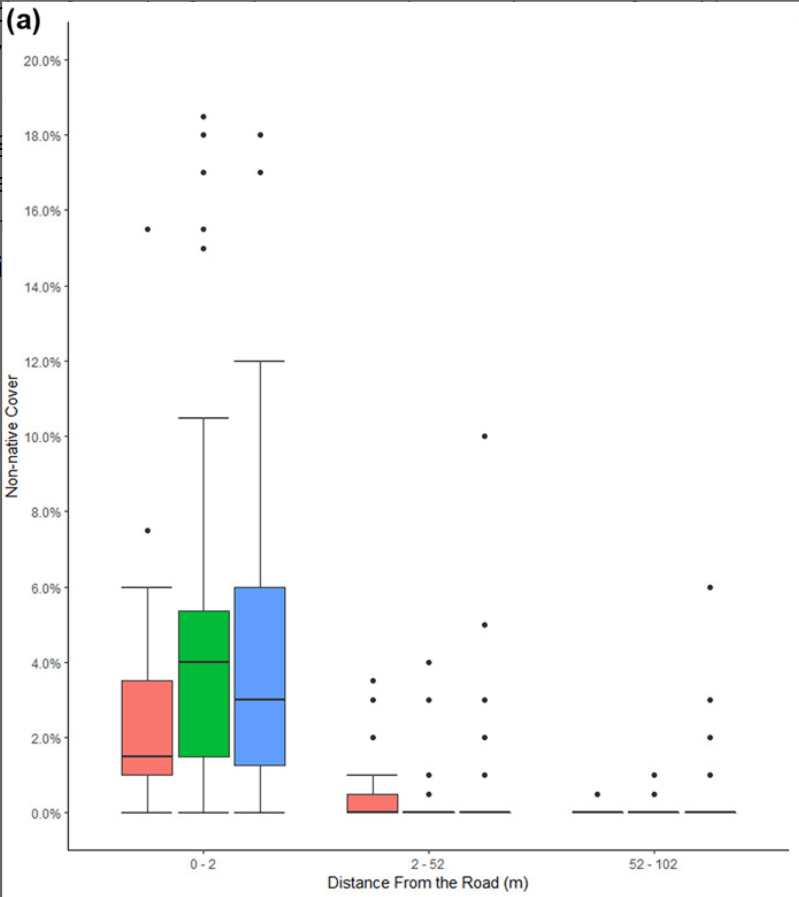
It is here that it all started for me. This valley is home to two of our Norwegian MIREN roads, which we started monitoring back in 2012. It also hosted some of the first microclimate sensors back in 2016, for a project that later grew into SoilTemp.

Autumn vibes in our MIREN plots, thanks to the very red berries of Cornus suecica

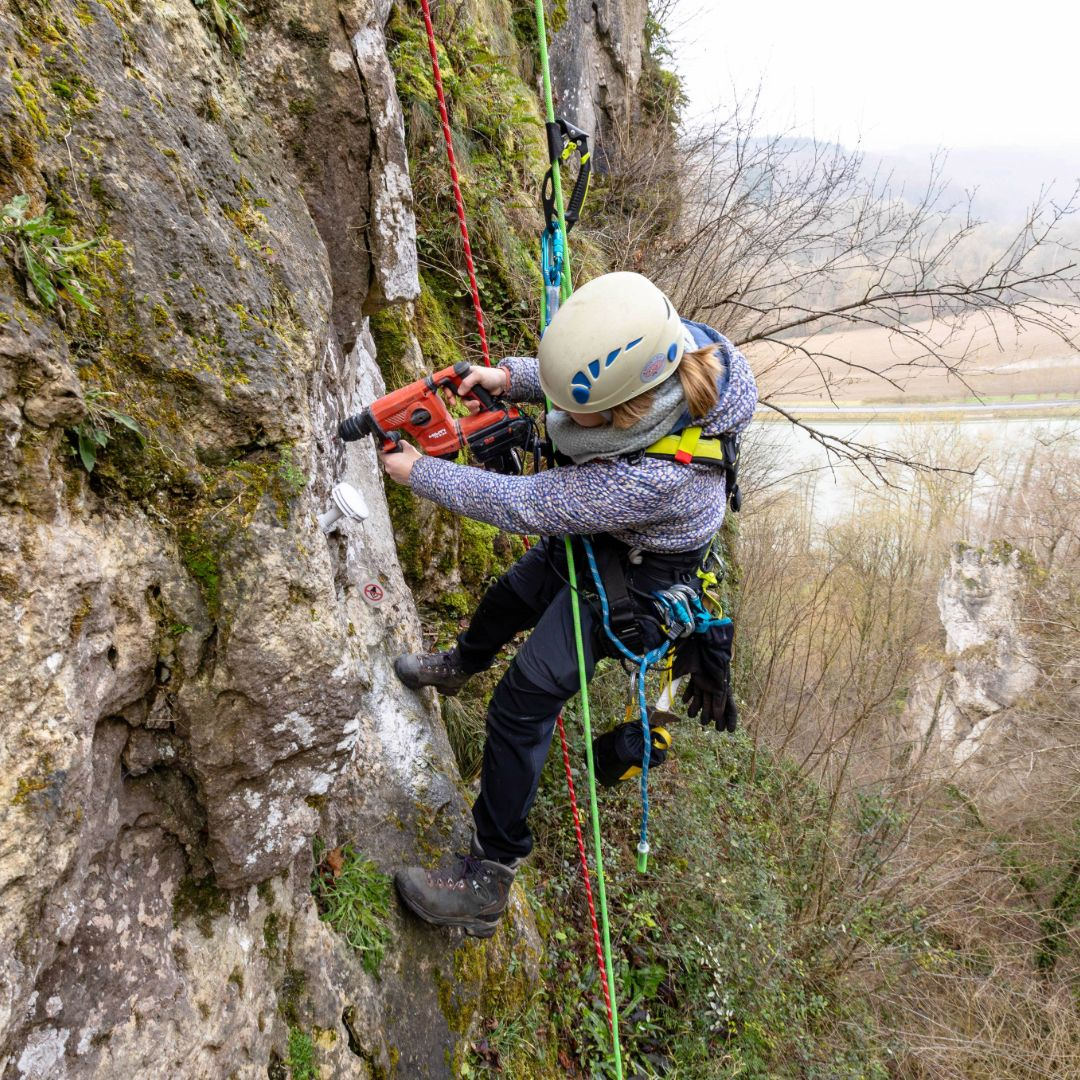
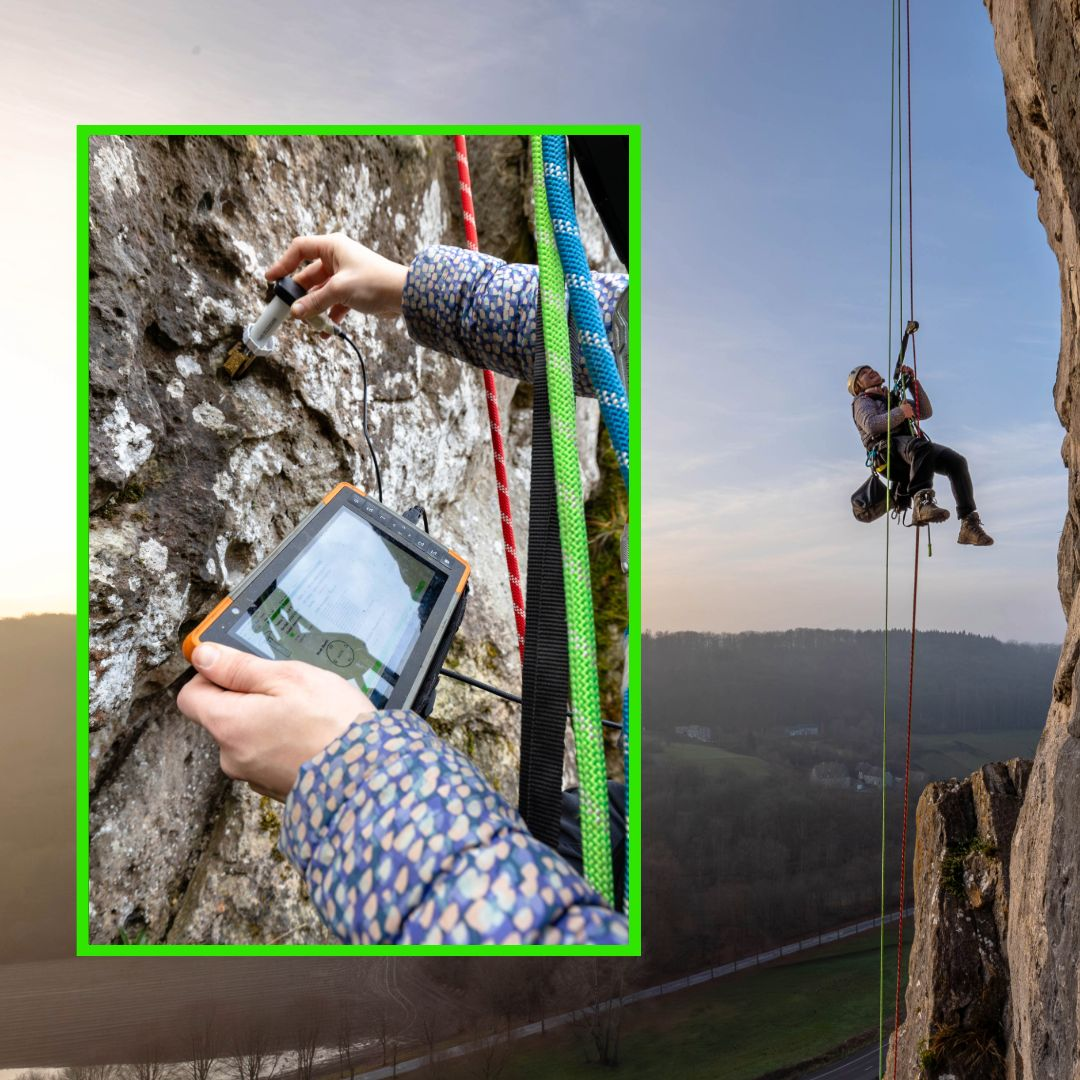
Now, it is mostly in charge of bringing us two days of happiness each year, as we enjoy its beautiful sites while reading out microclimate sensors and collecting vegetation data.

The road affectionately called ‘NO’, one of the cornerstones of our research since 2012
Our home for the night in the Skjomdal. Upgraded with a solar panel this year, the homely light inside for the first time didn’t have to come from candles.
Posted in Norway | Tagged , , , , , , , | 1 Comment

Airport botany

On our way to Abisko, northern Sweden, a massive early-morning thunderstorm in Brussels was the start of a 28-hour travel delay: we missed our next flight with a margin of just 10 minutes, and as such ended up too late for the last flight of the day to the little airport of Kiruna. Most of that delay was spent at Stockholm Arlanda, the giant travel hub just north of Swedish capital. There, we had to put up quite the fight to keep the delay at 28 hours only, as the initial proposition was closer to 72…

Now, students and I were not there to sit around and do nothing, we were travelling north for plants and nature! So, after the airline put is in the very agreeable ‘Comfort Hotel’ on the airport grounds to bridge the gap, we brought up a map of the airport and looked for an escape into the Swedish countryside. Now, Arlanda turned out to be remarkably suitable for such a plan. In less than half an hour of improvised hiking, we had left the concrete nothingness of the airport and wandered into increasingly amazing nature.

And so it happened that our layover at Stockholm Arlanda was used learning Swedish plants, chasing insects and discovering wildlife. In the end, the perfect start for the students for their month of botanizing in Abisko. The mood was set. The trip was going to be epic.

Top row: picturesque Swedish countryside house, some ‘true’ Swedish heathland, and a remarkably biodiverse lake.

Second row: relatively epic forest landscapes – Swedish strongsuit.

Third row: flowers on the airport concrete, a wagtail and Lythrum salicaria at the lake side.

Bottom row: very fluffy fields of Trifolium arvense, more Swedish heathland, and the cherry on top: an adder!

Posted in General, Sweden | Tagged , , , , , , , | Leave a comment

The ever-present ghost of data quality in SDMs

Those who know me are likely well aware of my interest in species distribution models (SDMs). In particular, I’ve been focused for years on how we can enhance these models using higher-resolution data, such as microclimate information or anthropogenic disturbance.

This queeste for increasing SDM-resolution, however, has to overcome a few highly important data-related issues that can’t be fixed by simply increasing the resolution of the maps used as explanatory variables. In a review published just now in Ecography, we discuss these and related issue: sample size, positional uncertainty and sampling bias. Indeed, one can have microclimate data with as high of a resolution as possible, if your species data is suffering from one of these three issues, you can’t get the performance of your model anywhere close to what you might have been hoping for.

Sampling bias, sample size and positional uncertainty – the three characteristics of the looming ghost of data quality that might affect the performance of your SDMs. All three of them are affected by species ecology and the environment.

Positional uncertainty

Case in point: positional uncertainty. When building SDMs, we often think about our species observations as points on the map. Often they are not, however; they are more like smudges. Depending on the data, the observational errors can range from just a few meters (e.g., GPS inaccuracies) up to a kilometer (e.g., aggregated data from global databases) or even more (e.g., historical data with poor location information such as some herbaria). Failing to take into account that uncertainty (i.e., working with the falsely comforting points rather than the smears on your map) could affect the apparent correlations between species observation and environmental data. The size and importance of this error also varies between species. For example, for mobile species it is often much harder to pinpoint an exact location, while deep-sea organisms are often located using less-accurate acoustic positioning.

Three categories of factors driving positional uncertainty: the resolution and configuration of the spatial predictors (e.g., micro- versus macroclimate data – see the paper for more details), recording techniques and data processing (e.g., GPS accuracy) and species ecology and site characteristics (e.g., a lower accuracy for big animals, limited GPS accuracy under forest canopies or in cities)

Sampling bias

A similar issue exists with sampling bias. Often enough, we feel reassured by big numbers, with models built using thousands of points looking soothingly trustworthy. Here again, however, these numbers could create false confidence.

Species observations often have strong spatial bias, with many points located close to each other, and big gaps in between. Typically, positive sampling biases have been reported towards easily accessible areas (e.g. proximity to roads, rivers, and urban settlements), protected areas, more populated areas, and charismatic species, leading to spatial and taxonomic biases. Uneven data-sharing practices make this issue even worse. These issues are not only present when using citizen science data, but at a larger scale also when using data collected by researchers, who are similarly biased towards certain locations that are more reachable, more interesting, or more likely to attract funding.

Clear recommendations

Importantly, our review goes beyond a simple discussion of these problems with our SDM-data. We made a point of creating clear, hands-on suggestions on how to deal with these issues, every step along the way. These suggestions are summarized in the figure below.

With that, we hope this review can become a helpful guide for anyone working in the amazing but treacherous world of species distribution modelling. With our review in hand, the data should not play further unexpected tricks on you!

Read the whole review and its recommendations here in Ecography.

Posted in Science | Tagged , , , , , | Leave a comment