A blogpost by 3D Lab team members Kyra and Olivia
What
A super cool project that is currently taking place in Zeeland is the Groene Revolutie (translating to Green revolution) organized by IVN Zeeland. The goal? To greenify all school yards within one school generation!
Currently, many school yards are characterized by monotonous tiling with very little greenery. Not only does this create a rather uninspiring, non-imaginative location for kids to play and learn, but it also turns schoolyards into heat traps during summer, with little room to escape the heat. A striking example was shared by a teacher who saw kids seeking shelter from the heat underneath a ping pong table. A greener schoolyard creates a more interactive environment to learn from, as well as a place where kids can actually relax and play during summer.
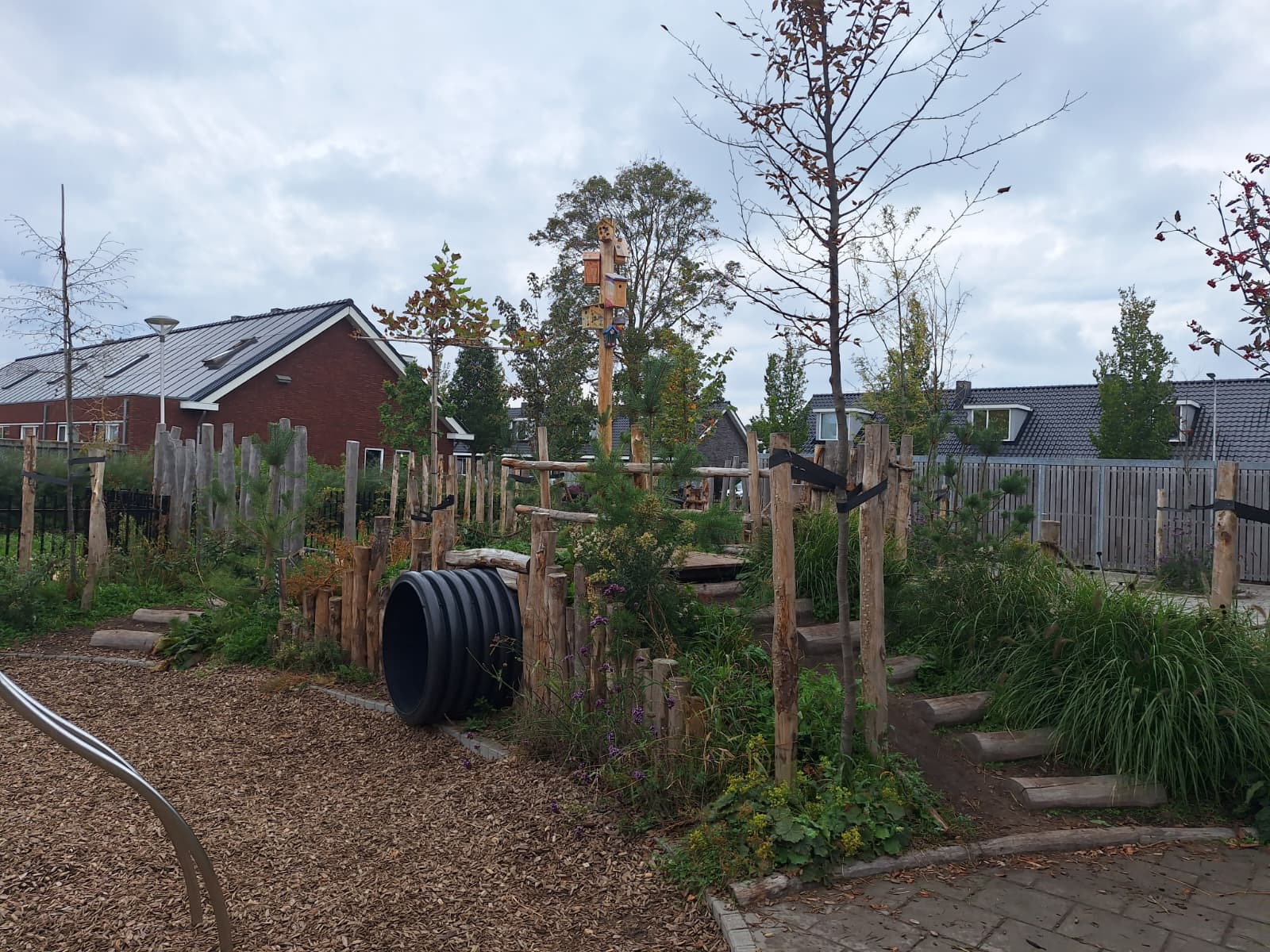
To measure the effects of this greening, we (Kyra and Olivia) visited multiple schools to conduct both microclimate and biodiversity monitoring. Depending on the stage of the school’s greening journey, we carried out either baseline measurements (before greening) or follow-up measurements (after greening).
Sensors & biodiversity monitoring
Microclimate sensors were installed at locations that would be greenified to see how temperature and moisture levels change. Sometimes a bit tricky, as you can’t exactly place a sensor in a tile! Kids also helped us find suitable spots for the sensors. At schools that had already been greenified, some sensors had gotten lost during the process. Therefore, we sometimes had to reinstall sensors at their original locations.
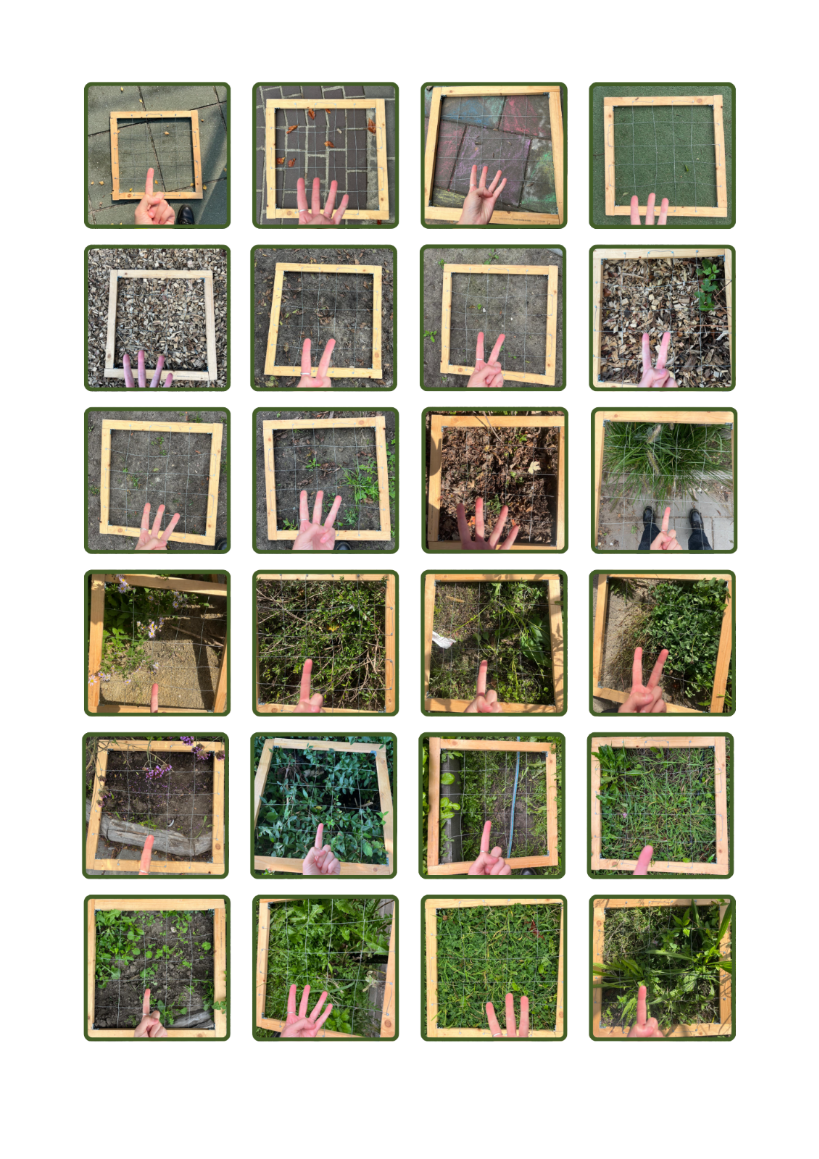
We measured biodiversity using a grid, recording the different plant species and their coverage in different parts of the schoolyard. Even the youngest children, who did not take part in the lessons, where curious about what we were doing and came to look at the different plants in the grid. They were very eager to help us look for new spots they thought we should measure, including one area where they claimed to have found 100 plant species!\
Teaching
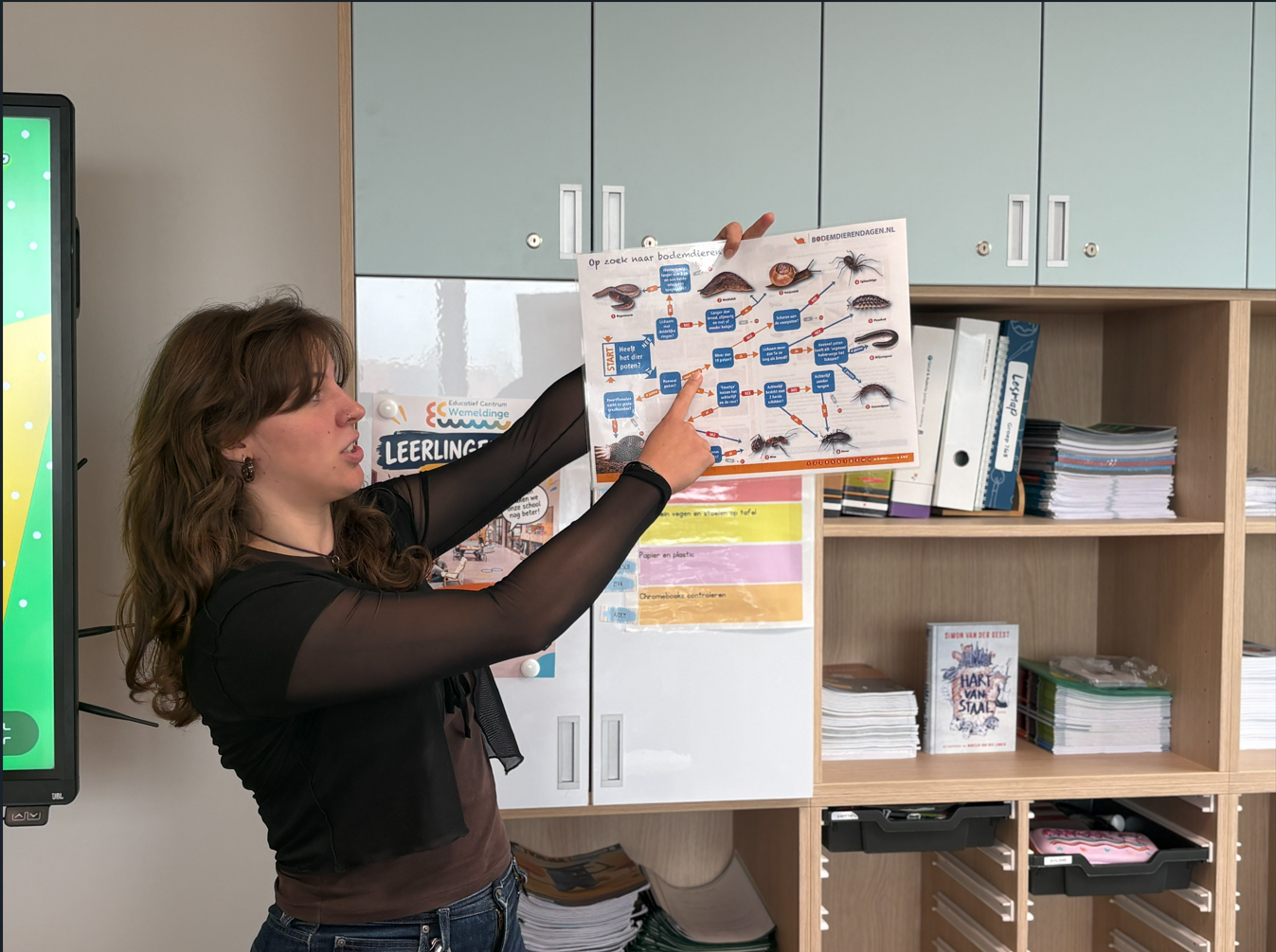
Besides doing the monitoring, we also gave lessons to the kids, where we not only explained the topics we study but also did activities to bring the theory to life: installing sensors together, looking for soil life, or searching for plants in the schoolyard. An extra bonus of teaching is that it makes kids feel more involved in the science, for example by feeling responsible for keeping the sensors safe. We would love to highlight two of the lessons we gave.
Plant biodiversity
For children aged 9–10, we went on a mission to discover plant diversity in their own schoolyard.
The children first investigated a potato plant growing in a small pot and discussed what plants need to thrive; sunlight, water, nutrients and enough space to grow. This sparked a conversation about how removing paving stones from schoolyards can create more space for plants and provide a valuable habitat for insects, in which some schools already succeeded as a result of the recent greening projects.
Equipped with a map of the schoolyard and the ObsIdentify app, the children searched for as many different plant species as they could find, where they observed that even their schoolyard can have a large variety of plant species.
Along the way, some children came across the anise hyssop (Agastache foeniculum and were especially excited to discover its unique smell of mint and liquorice. The Chinese fountain grass (Pennisetum alopecuroides) also sparked interest due to its Dutch name; Lampenpoetsergras, which literally translates to lamp cleaner grass, something they found very funny.
Soil life
For children aged 6-8 and 11-12 we went on the hunt for soil fauna to discover what species live in the soil of schoolyards. First, we brainstormed about different species living in the soil and the important work they do; breaking down organic matter, providing nutrients for plants and helping to keep the soil healthy. We also discussed microclimate and how local temperatures can vary across their schoolyard. We asked where they would look for shelter during a heatwave and how these locations often overlap with the places where soil life likes to hang out. After the heated-discussion (quite literally!), it was time to go outside and look for small creatures to put in their magnifying glass jar.
To start off, the kids created a nice little living space for soil life in their jars, filling them with soil and leaves. Once the mini-environments were ready, the hunt could begin! Some started to dig and stomp the ground (mimicking the rain) to look for rain worms, while others decided to look underneath tiles and planters, finding, to their amazement, many centipedes and isopods. Ants, slugs, spiders, and shiny beetles were also collected. One kid even managed to catch a bee (although not officially part of the soil life). During the search for insects the children also discovered a larva of the harlequin ladybird, or multi-coloured Asian lady beetle (Harmonia axyridis). One child asked us whether it had come all the way from Asia for its holiday, which was a funny, and very smart question that led to a conversation about how species can spread to new places.
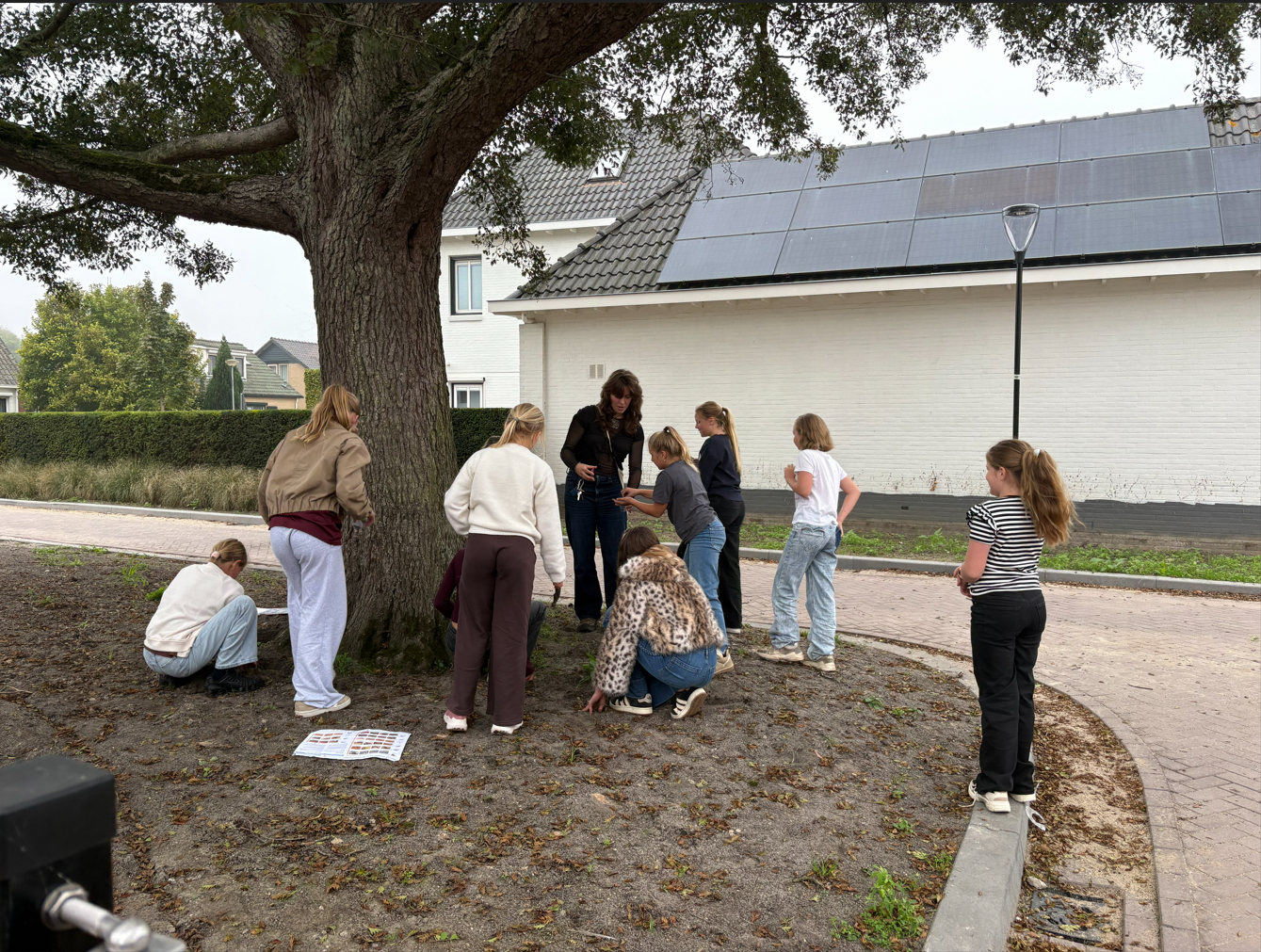
Another great moment was with a child who initially seemed a bit hesitant to touch the ground, only digging with a small twig because she saw soil as something dirty. After some encouragement to join the digging session with bare hands, showing how nice it actually feels and explaining that you can always wash your hands afterwards, it was lovely to see that by the end of the lesson, she had her hands completely covered in soil and was smiling (one second later, followed by a high five with equally soil-covered hands). It felt like a small victory in helping someone feel more connected to nature and see soil as something other than just “dirty”.
And an extra bonus: all the schools can access their own schoolyard’s microclimate and biodiversity data, allowing them to track changes over time and continue collecting more data!


