With autumn well on its way in the Northern Hemisphere, this is a perfect time to share one of our autumn field stories from the top of the world: Lapland. Hurry inside and grab your warmest blanket, this story is going to be chilly! You might know this story from a previous post already, but this version was on request for the MRI Mountain Blog.
On the 5th of September, a late summer heat wave was battering Western Europe. In France, Belgium and Germany, even in large parts of southern Sweden, everybody had their barbecues out. For better or worse, however, we had chosen that glorious late summer day to venture up above the polar circle. While the rest of Western Europe was out swimming and barbequing, Lapland was getting ready to hunker down for winter. No matter how badly we wanted it, barbecue would not be on our menu that day.
We had made the trip up north to the mountains near the village of Abisko, Sweden, to study the effect of tourist trails on mountain vegetation in extreme climates. Although we were interested in vegetation in extreme climates, we weren’t particularly interested in experiencing the extreme climates themselves. After all, if you spend your days crawling through the vegetation on a mountain slope without any protection from the elements, it’s best to avoid these elements.
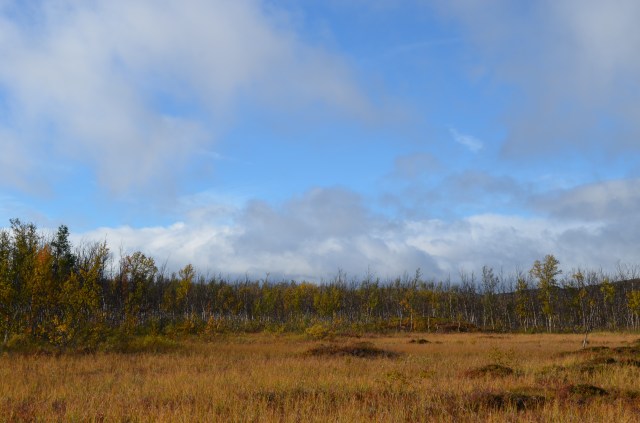
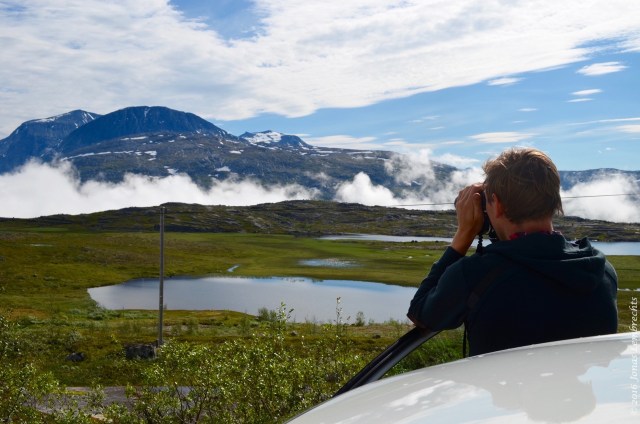
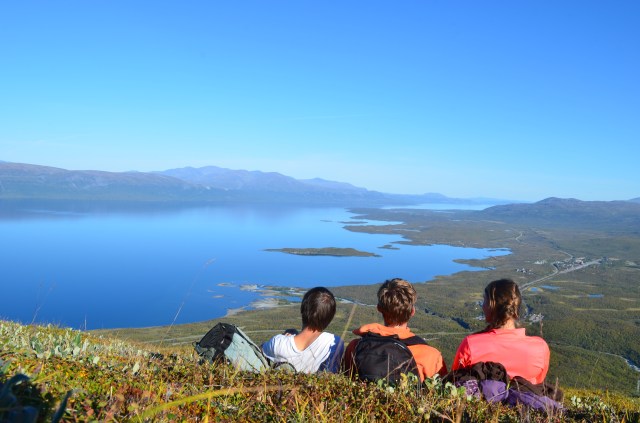
A late summer day in Lapland.
That particular 5th of September, we started our day down in the valley with a nice little subarctic summer sun. We were headed for Låktatjåkka, a valley famous for its breath-taking views on (rare) sunny days and even more (in)famous for its complete lack of views on most days. We had to be there for the walking trail spanning the whole gradient from the lowland forest till the rocky tops. A strenuous hike, but a long gradient was exactly what we were looking for.
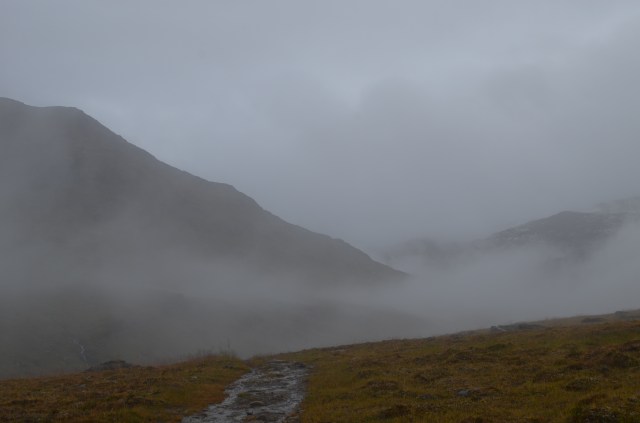
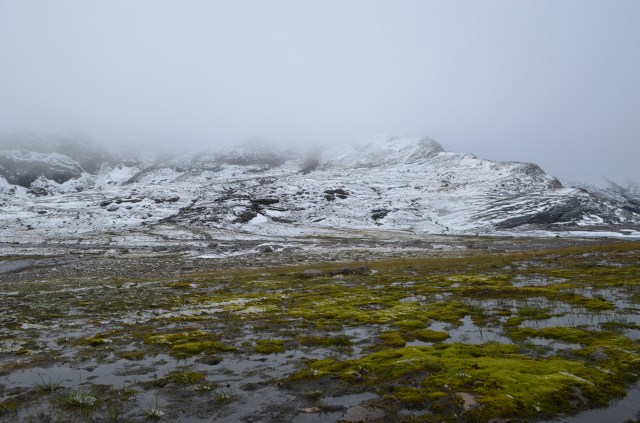
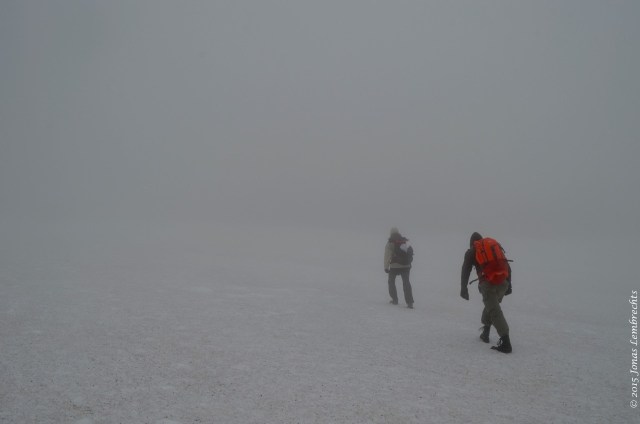
Entering the cloud. The valley of Låktatjåkka is famous for its ability to hold clouds in its grip forever.
As we headed toward the valley, the rays of the morning’s cheery subarctic sun faded behind ever-grayer tendrils of fog. Our apprehension grew as we entered the valley and headed into the fattest, most stubbornly unmovable cloud I have ever seen. At an elevation of 600 meters, it started drizzling. At 800 meters, temperatures had dropped to 0°C. At 900 meters, we arrived at our last hint of comfort, a little hut that provided a minimum of shelter and a place to warm our hands around our precious thermos of hot tea.
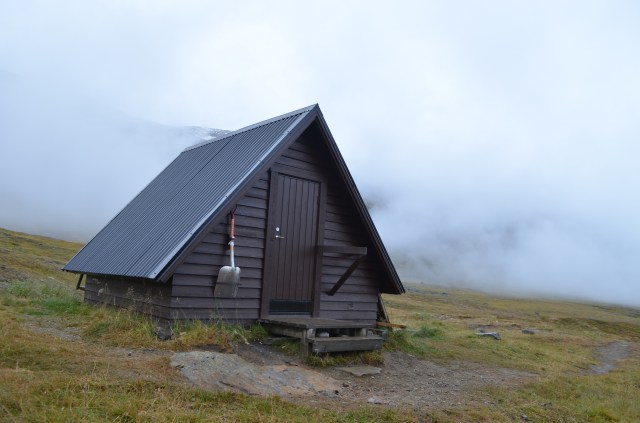
We discussed our options as we nursed our tea. If temperatures were already so low, a drizzle in the valley inevitably signaled a snowstorm at the top. As we debated, the first patches of white appeared on the vegetation behind our little shelter. We didn’t really have any choice other than to continue, though. The bad thing about autumn is that the snow is unlikely to melt as the season advances; if we didn’t get our data now, we’d have to wait until next year.
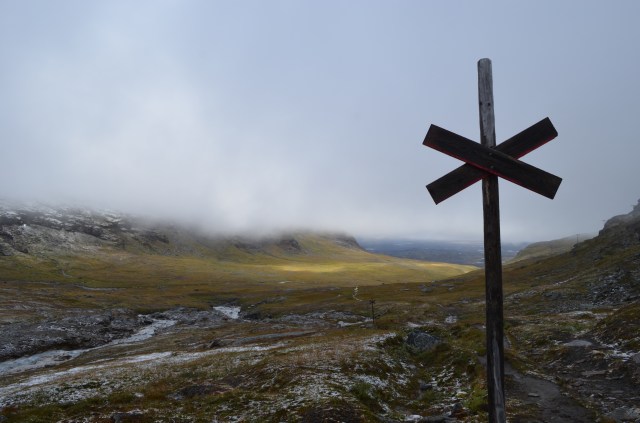
Entering the world of snow, a last look at the patch of sun in the distant valley.
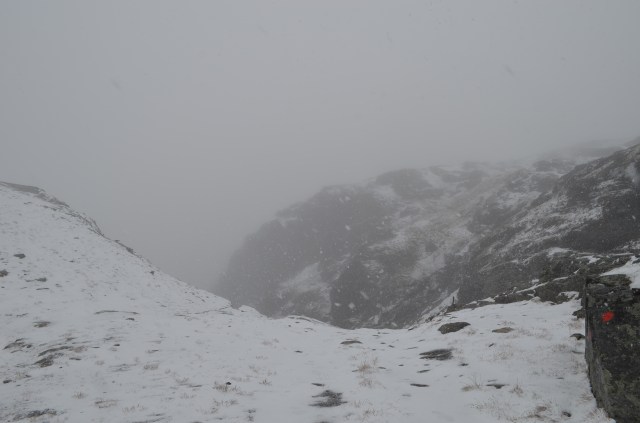
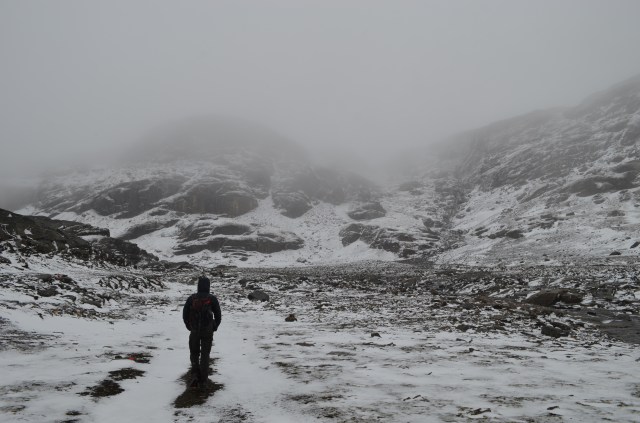
So we braced ourselves, zipped up our windstoppers and headed out into the swirling snowflakes. Soon enough, the little bit of snow started to pile up and before we reached the top, we felt as if we were stuck in a snowstorm in the midst of winter.
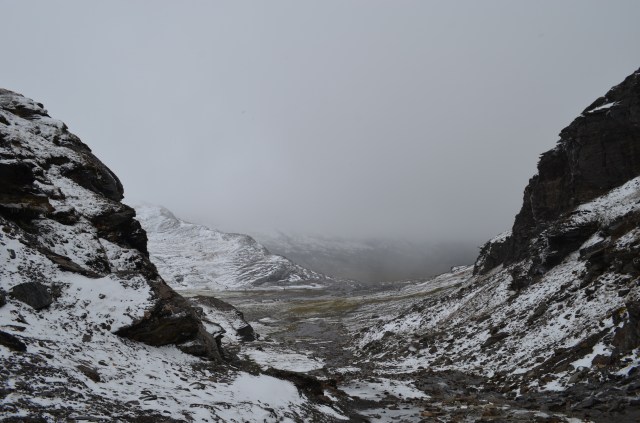
We tried, though, we really did. We crouched down and blew snow from leaves, ruined our flora’s while searching for species names and numbed our fingers digging up sensors. But identifying plant species under a layer of snow – while fresh snow continues to pile up – is just not as accurate as you would hope. The mountain had won. Our highest plots were lost for the season, no matter how hard we tried.
Heading down, it turned out that we even had had the wind to our back the whole time. You can imagine the difference. The mountain had not only denied us our highest plots, it now even felt like it wanted to keep us up there forever, assembling all its forces to blow us back uphill.
Mountains are beautiful, unpredictable creatures that take little notice of lowland niceties like heatwaves and barbeques. But if you ask me, it’s an honour to study them, and one that guarantees a lifetime of adventure. And a good appetite for hot chocolate.
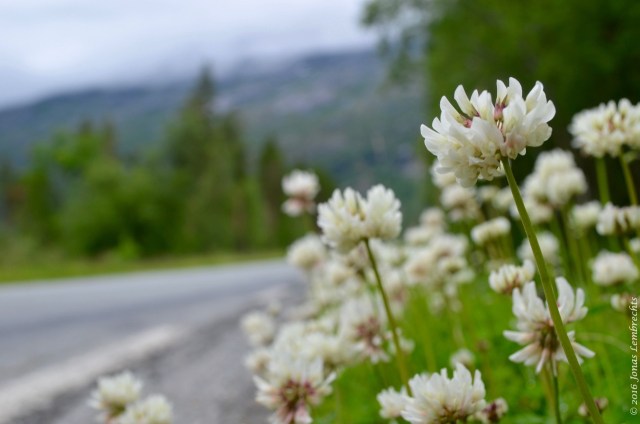
If you are interested in participating in the fast version of our trail investigation – on a better day than we had – don’t hesitate to contact us at miren.trails@gmail.com. We are on a hunt for typical mountain invaders, like red and white clover (Trifolium pratense and T. repens) and welcome everybody to keep an eye out for them. If you want to justify an extra hour or two of hiking, every extra observation will be cherished. Just save its location in your gps every time you see one, it is that simple!







 The 3D lab