Avoiding the best spots

Montpellier - 35

How plants deal with stress has always fascinated me. Remember that post where I argued that plants can fly? Well, they can for sure, yet that does not mean they have to be able to deal with the circumstances wherever they land.
Montpellier - 13

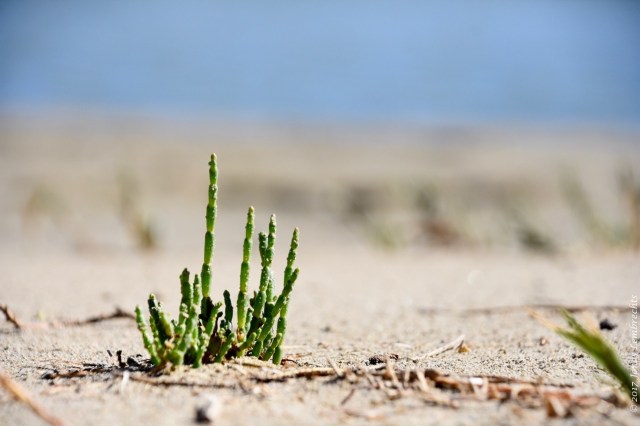
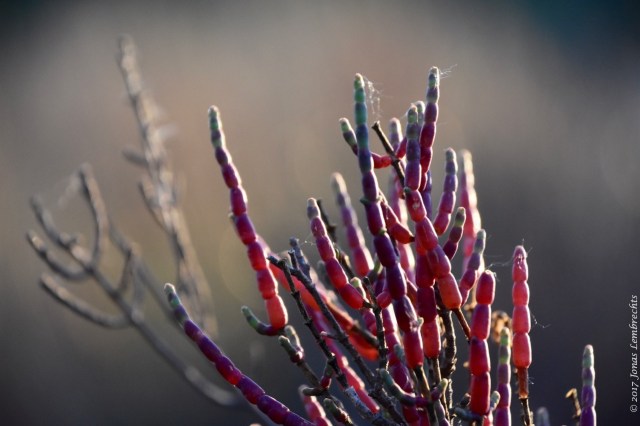
Pickleweed, Salicornia sp.

It is thus a logical assumption that plants would prefer to be on the best spots possible in that sessile part of their lives: if you have to stay where you are, better be somewhere good, don’t you think? Yet there is animportant issues with being on a good spot: your neighbours.
Montpellier - 46

Competition for the good spots is tough, and only the best competitors will be able to survive there. Living in optimal conditions might thus easily be as much of a resource investment as the other alternative: living were conditions are much worse.
Montpellier - 49

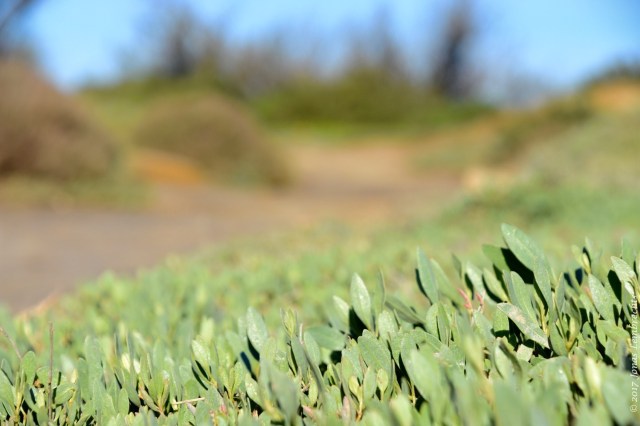
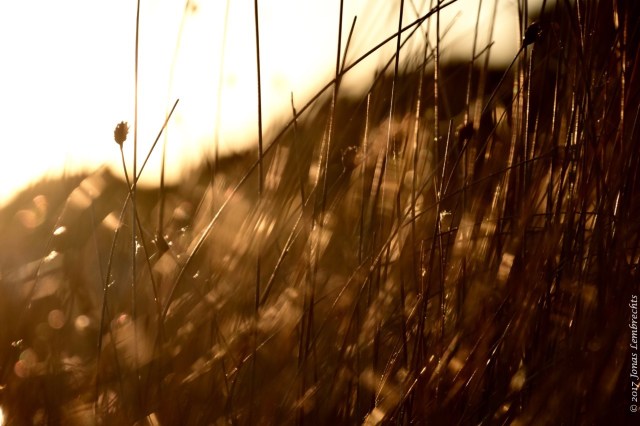
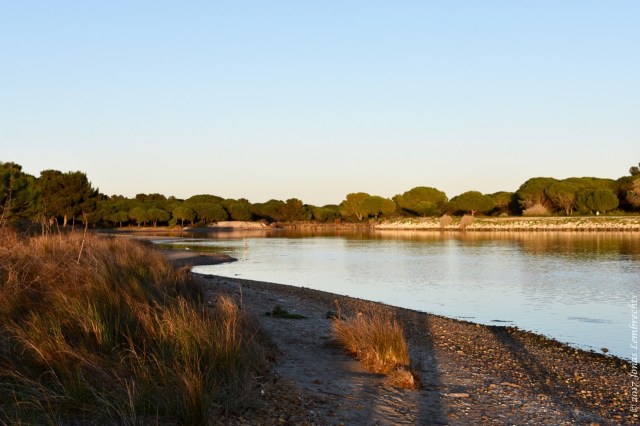
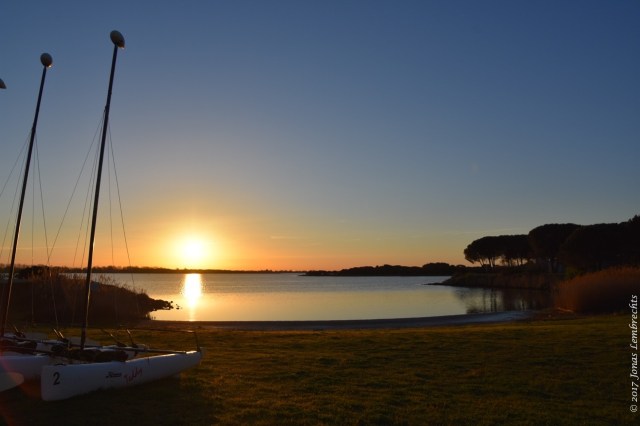
And that brings me to the stress-tolerant species: plants that invested their energy in coping with stressfull conditions, instead of finding ways to outcompete others in less stressfull environments. Good examples of such stress-tolerant species can be found in the pictures in this post: all species from the Camargue in southern France, a brackish vegetation along the inland lagunes of the Meditteranean.
Montpellier - 48

An inland lagune close to Montpellier, France

They often are succulent, or at least very sturdy, with stems and leaves especially designed to limit the water loss in the high-salt environment. This investments has a cost concerning growth rate, reproduction etc., yet in an environment where only the tough ones can survive, growing fast is not a necessity.

More pictures: check the gallery called ‘Montpellier 2017‘ on the right of this blog.
Posted in France | Tagged , , , , , , , , , , , | Leave a comment

The feel of the south

Montpellier - 25

Do you want to experience the feeling of spring in the south of France? You will get the closest possible by visiting the beautiful picture gallery ‘Montpellier 2017’ on the right of my blog, or via this link. There you can see in a series of images how I experienced the south of France while I was there for the Functional Ecology conference end of March.

Montpellier - 30

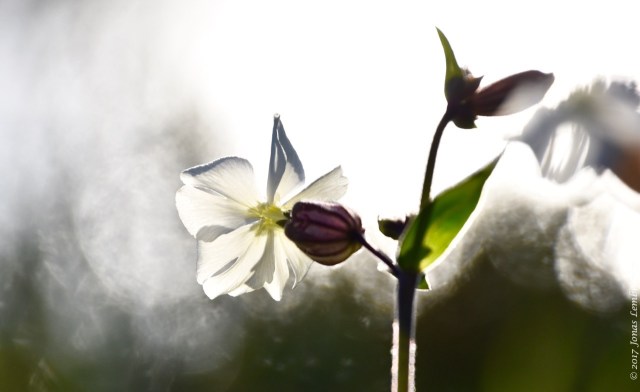
White silene flower

An occasional conference is a necessity, in my opinion. Not only for the highly interesting and rewarding contacts with other scientists, yet also for the experience of the totally different ecology of the local ecosystem.

Montpellier - 47

For an ecologist, getting the feeling of a wide variety of these environments is even crucial to understand the world and how it works. It helps keeping an open mind when searching for global processes and local variation.

Montpellier - 39

Camargue horse enjoying the morning sun

Interestingly, these different environments also indirectly contribute to the power of a conference: they get reflected in the research topics and – even more importantly – the way of thinking of the scientists you meet there. They often add unexpected insights or viewpoints to what you thought of as a universal ecological viewpoint.

I thus spend some time getting to know key factors of the local nature: most notoriously the lowland salt marshes and the large amounts of water.

Posted in France | Tagged , , , , , , , , , | Leave a comment

Strike: 15 days and counting

This gallery contains 6 photos.

Originally posted on Lore and Leandro in French Guiana:
15 Days ago it all started with 1 roadblock in Kourou. Strikers blocked the access road to the Space Center in an attempt to delay the planned rocket launch. It worked.…

More Galleries | Leave a comment

Plants do fly

At the Functional Ecology conference in Montpellier (see earlier posts), several times I heard the saying that plants cannot fly and as such have a significant limitation compared to other organisms.

Montpellier - 18

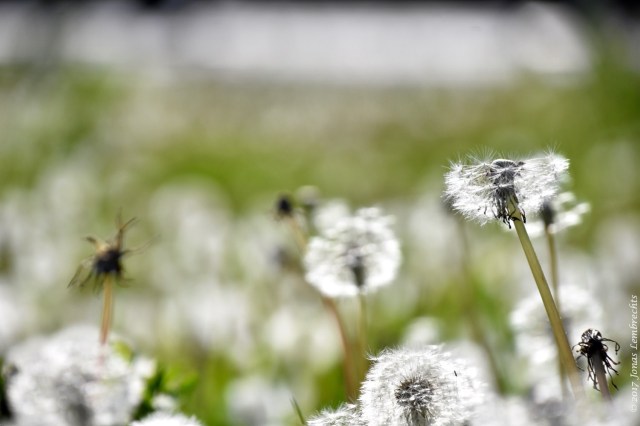
Seeds of the dandelion (Taraxacum officinale), possibly the most well-known image of flying plants

Yet I strongly disagree with that saying, no matter how true it might look at first sight. Plants do fly, some of them even for large distances, just not in all phases of their live. As in all organisms, it is important to understand the live of a plant through the different life stages it is going through: germination – growth – flowering – seed production – dispersal – new germination. Even within the same plant species, factors working in on each of these life cycle stages can be totally different from the other.

Montpellier - 15

A young Euphorbia growing in a bed of poplar tufts, seeds with long white hairs attached to them to aid wind dispersal

Many plant species are highly mobile, either flying, swimming, rolling, jumping or passively travelling attached to other mobile organisms or things. They just aren’t mobile in every life stage; their mobility is limited to their live as seeds. Yet this easily overlooked phase of mobility is not trivial: it defines why plants grow where they grow, it defines if they can track climate change or not, it defines if they are capable to track fast – or slow – changes in their environment.

Montpellier - 16

Little purple Veronica flower in a bed of poplar tuft

Even the duration of this phase is not necessarily neglegible. Many plants can stay mobile for a long time, until they find a spot to settle down, and especially for annual species the time spend as seed and as actual plant is not so different at all.

Montpellier - 17

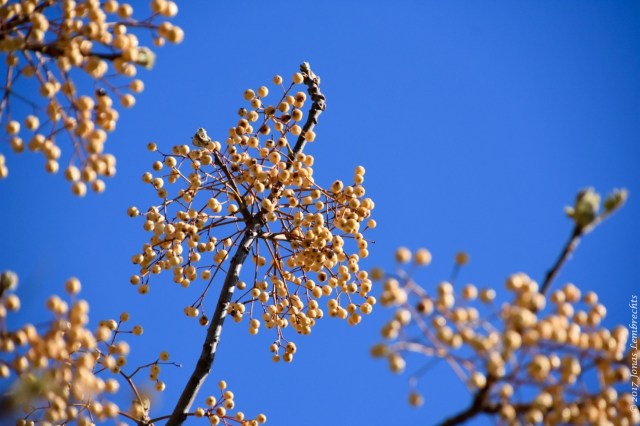
Berries can fly as well, albeit often only in the stomach of a hungry bird

At the conference, I even gave a presentation about travelling plants, using their skills to hike uphill in the mountains. Such unusual travel plans will stay a significant component of my work in the next months, so stay tuned to learn some more!

Montpellier - 19

UPDATE 5/4/17: There is a second – highly important – life stage in which plants fly: as pollen. While they can travel impressively large distances in this shape, they of course need to find a conspecific flower at the end of their trip. Yet this gives most plants two distinct options in their lives to travel! Should I convince you more that plants are not  suffering from being sessile?

Posted in France | Tagged , , , , , , , , , | 3 Comments

Montpellier

A post on the Functional Ecology conference in Montpellier, organised by AnaEE France.

DSC_4799

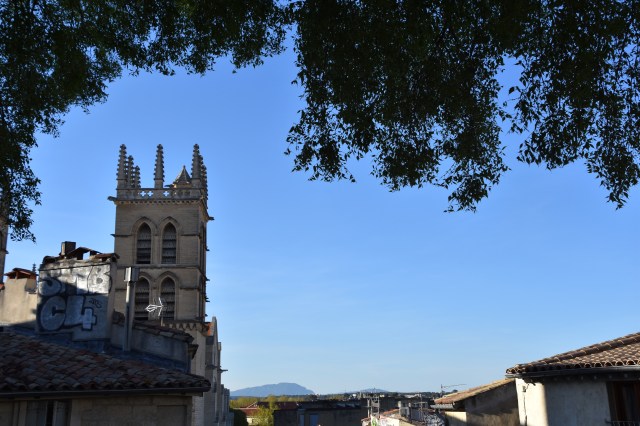
Opening up the view on Montpellier and its cathedral

Montpellier, the city that opened up the views on the interesting topic of functional ecology (the theme of the 3-day conference I attended here this week).

DSC_4732

Overarching the entrance to the cathedral of Montpellier

A city that – through this conference – taught me that we need strong connections between the various pilars of ecology, and keep on searching for ways to integrate them: (1) repeating projects at different locations, yet taking into that each different location will have different factors at play; (2) searching for adequate models to cover this increasing complexity that we want to explain and (3) being aware of the need of good platforms to share data and information, that are consistent between different scientists.

DSC_4775

Two towers are better than one, as they are never exactly the same

And a city that again convinced me that two experiments are always better than one, as every attempt to approach an ecological issue from another direction will bring you closer to the truth, yet not always directly.

Posted in France | Tagged , , , , , , , , , , , | Leave a comment

Functional

DSC_4399

This week, I took the train down to Montpellier, in the sunny Meditteranean part of France, to join a conference on Functional Ecology. Here, scientists gather around the common goal of trying to find the ‘how’ in ecology. How do organisms do what they do, how do they ‘work’ in relationship with their environment?

DSC_4382

Next to an awesome location, we thus also have highly interesting scientific talks, that will hopefully teach me a lot more about a way of ecological thinking I have less experience with.

More pictures and stories from the Mediterranean soon!

Posted in France | Tagged , , , , , , , , , | 1 Comment