Revisiting the highways of the mountains

In 2016, a significant endeavor began as we initiated the monitoring of vegetation along two cherished mountain trails in the Abisko region. Our primary objective was to assess the impact of these trails on the mountain vegetation. Specifically, we had a hunch that the trails might induce similar effects to what we had observed along roads: a notable reshuffling of mountain plants, allowing species to travel up and down the mountain, following the footsteps of hikers on the trails.
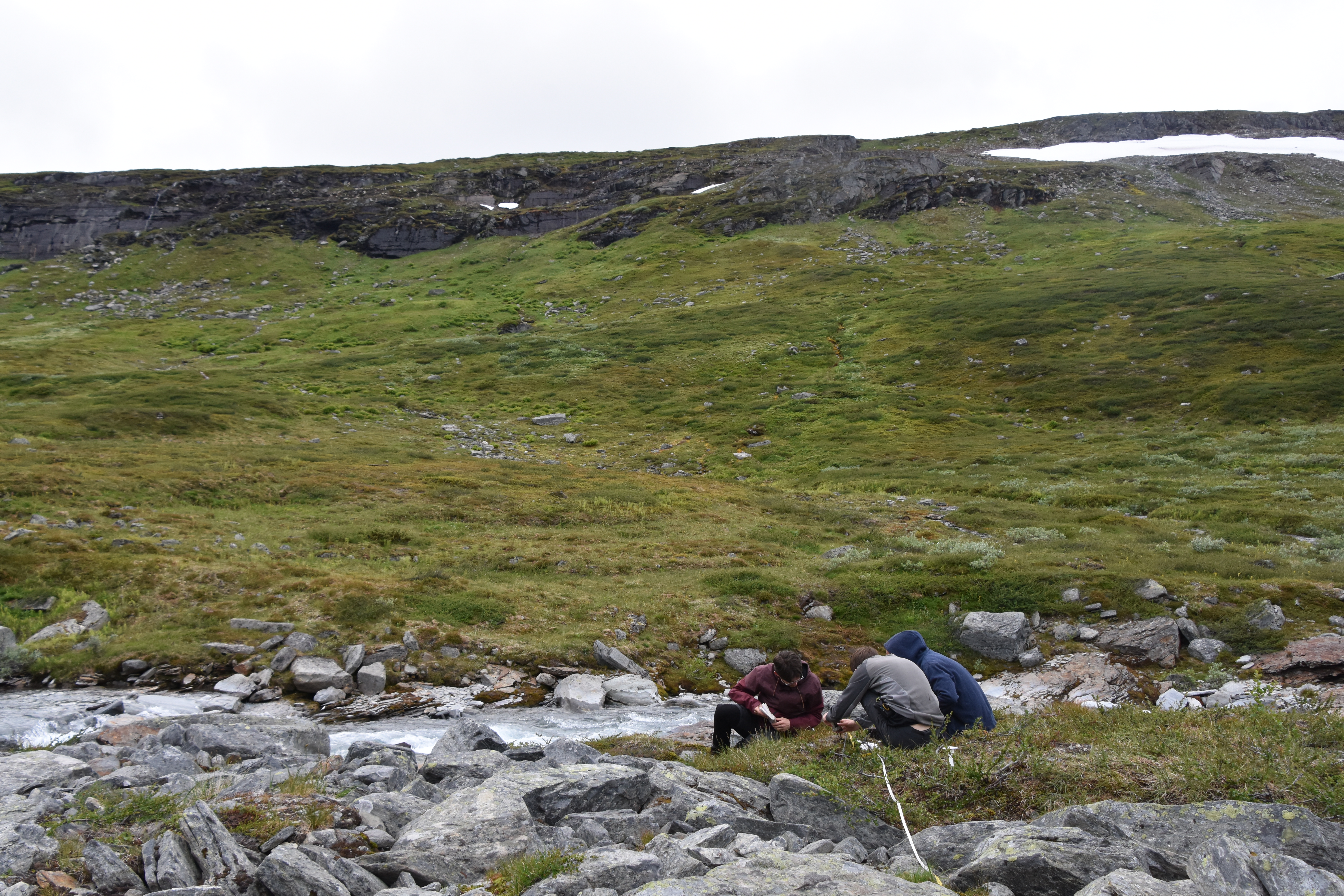
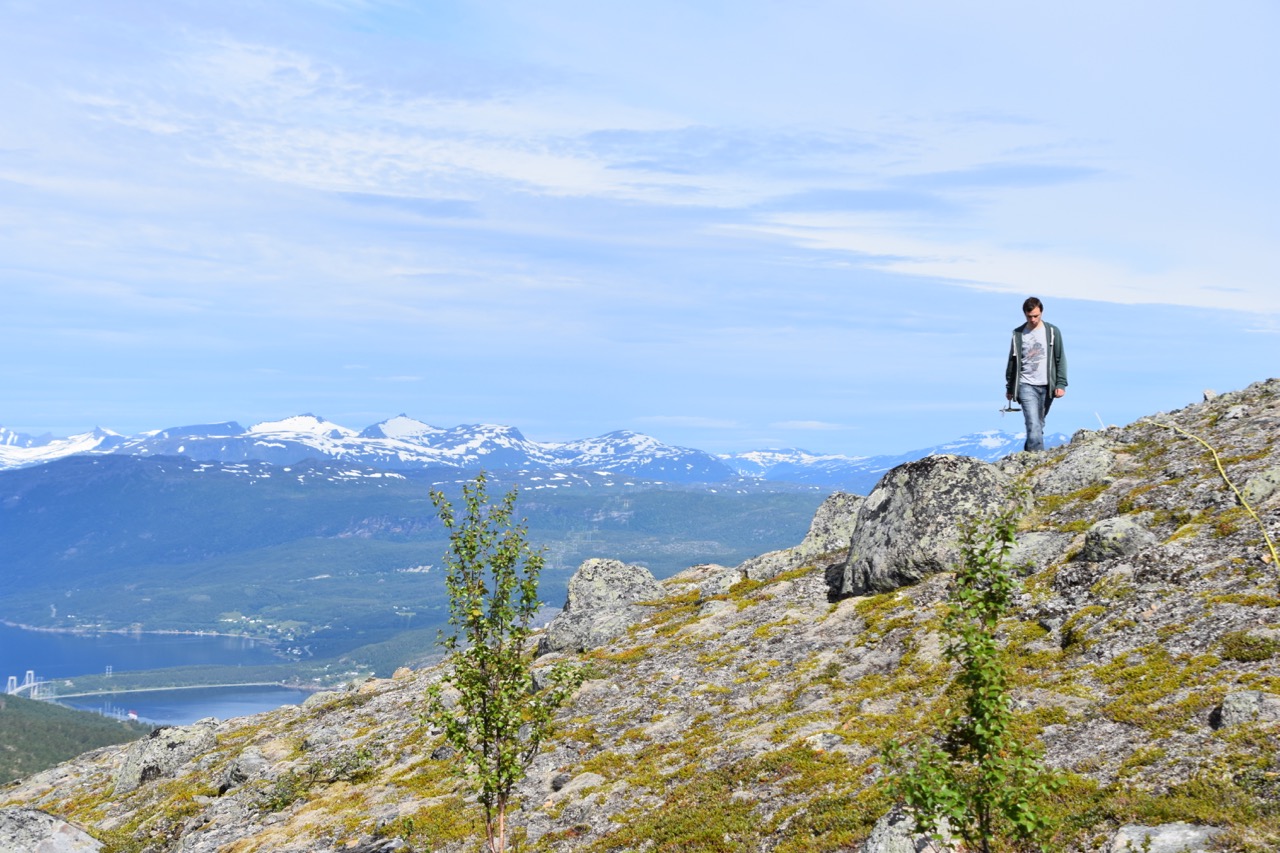
The team monitoring the vegetation on the bank of a little river, flowing noisily down from the best-studied mountain in the region: mount Nuolja

Understanding changes in species distribution becomes much smoother when tracking the same plants over an extended period. Therefore, it required persistence. With some resourceful juggling of funds and time, we succeeded in assembling the necessary crews to revisit these trails in 2018 and 2020 (though we have to admit, Covid almost thwarted our plans!).
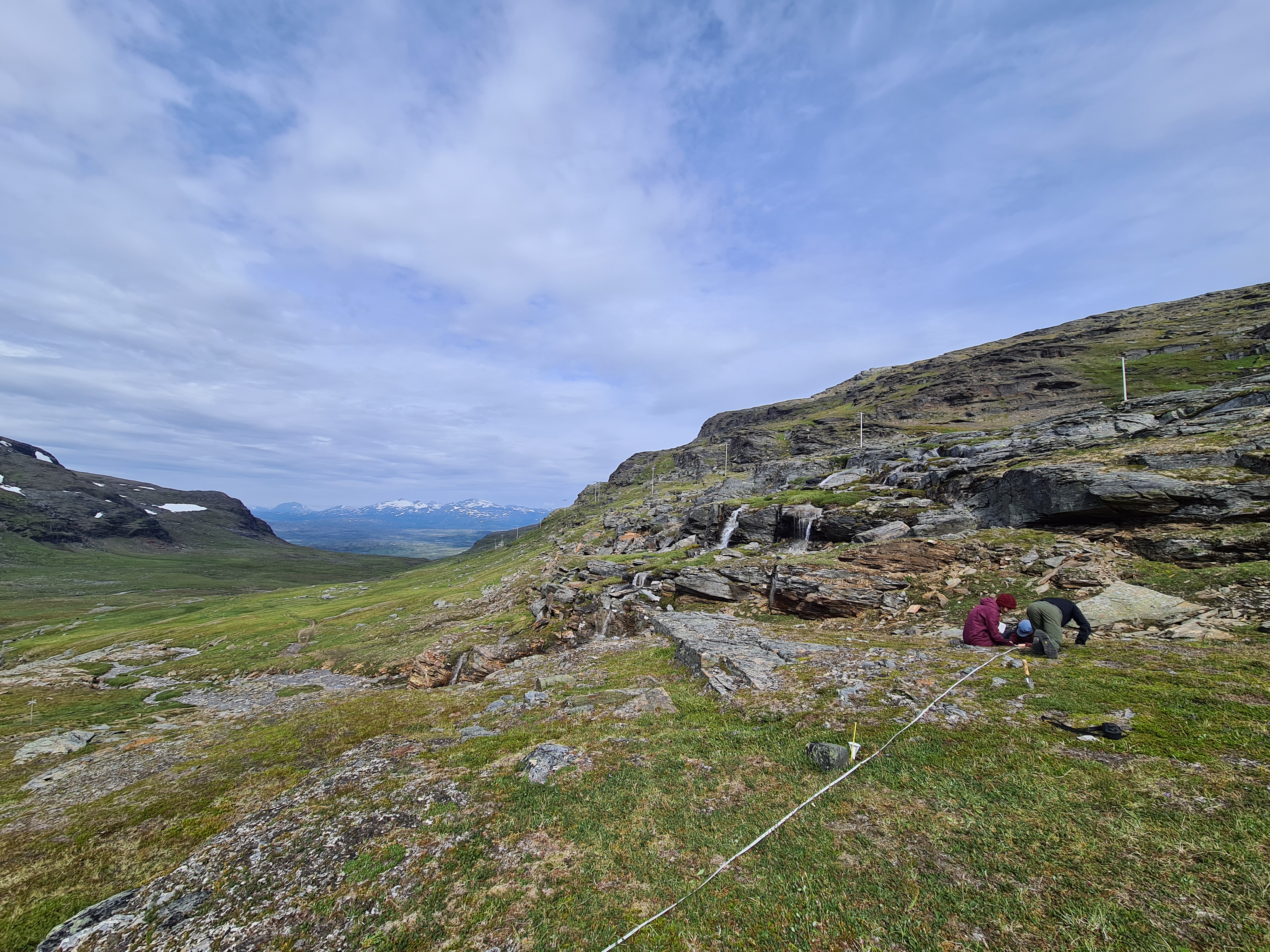
Botanizing with a view on the slopes of Laktatjakka valley

Now, in 2023, our team has returned, fully recharged and eager to embark on another year of monitoring. To add to the excitement, we’ve welcomed new master students to our ranks, two of whom will delve into the intriguing topic of how these trails impact the vegetation.
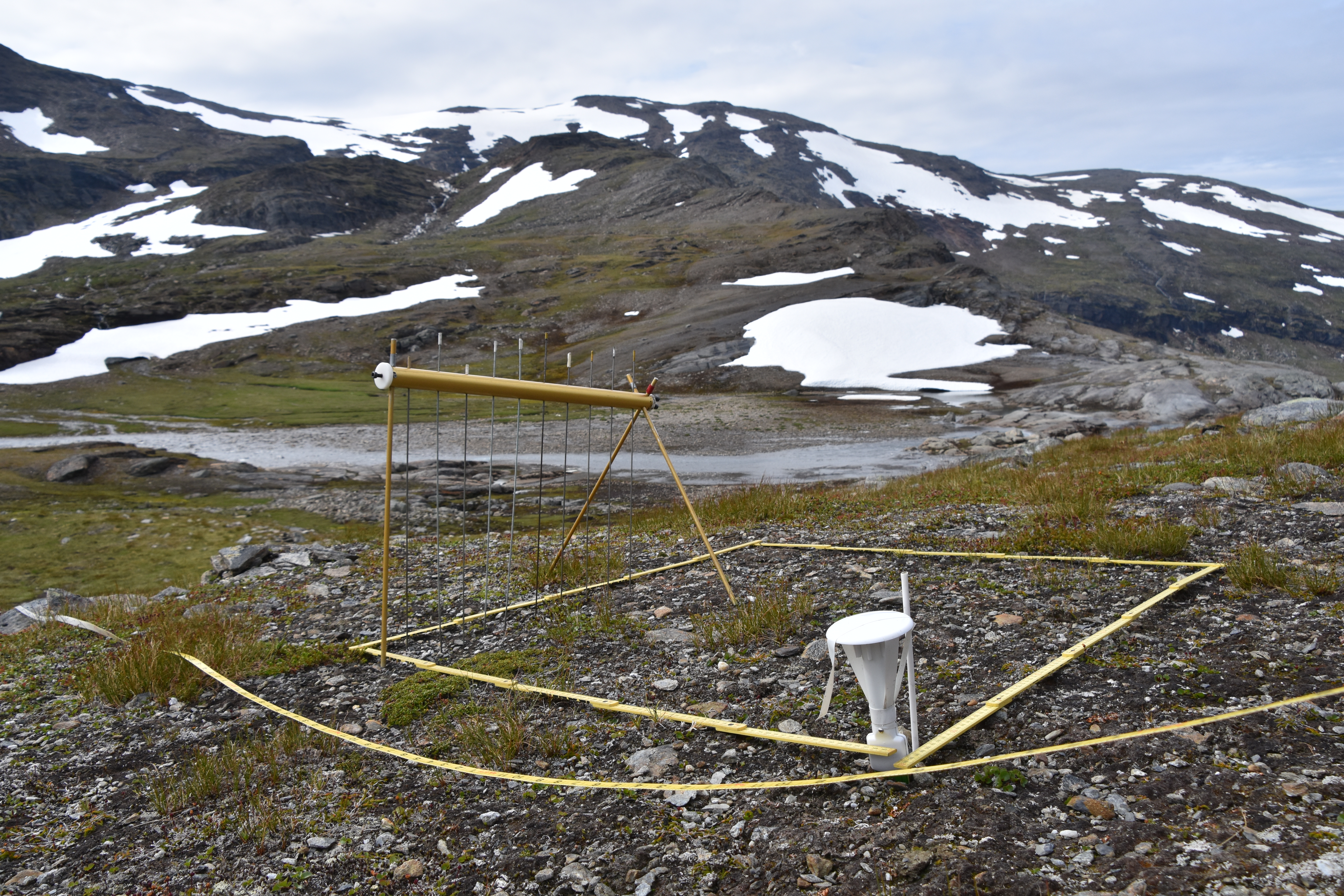
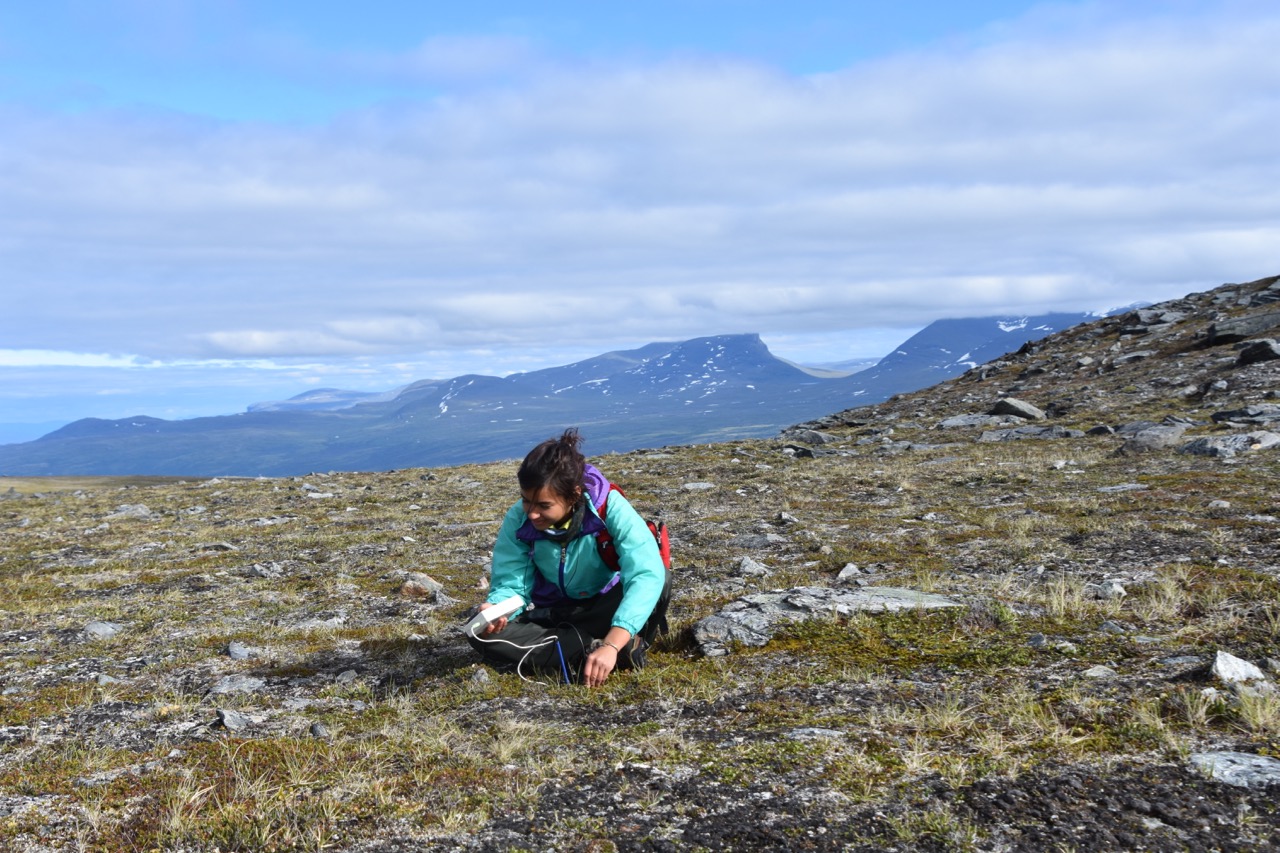
Microclimate sensor, and one-meter survey plot with a pin-point frame. Pins are dropped 100 times in such a plot, and we write down every plant that is touched, to get an as objective as possible idea of the plant community in the plot.

Tist will focus on the temporal dynamics, paying close attention to non-native species. We already know that non-native species tend to thrive near trails worldwide, although perhaps not as fervently as they do near roadsides. In the northern Scandes, however, these non-native species seem to have been limited along the trails so far, possibly due to the extremely cold climate and the comparatively lower number of non-native species in European mountain regions. Nonetheless, such circumstances can change rapidly, which is why Tist will diligently monitor their movements: Are they reaching higher elevations in 2023 compared to 2016? Is their coverage increasing?
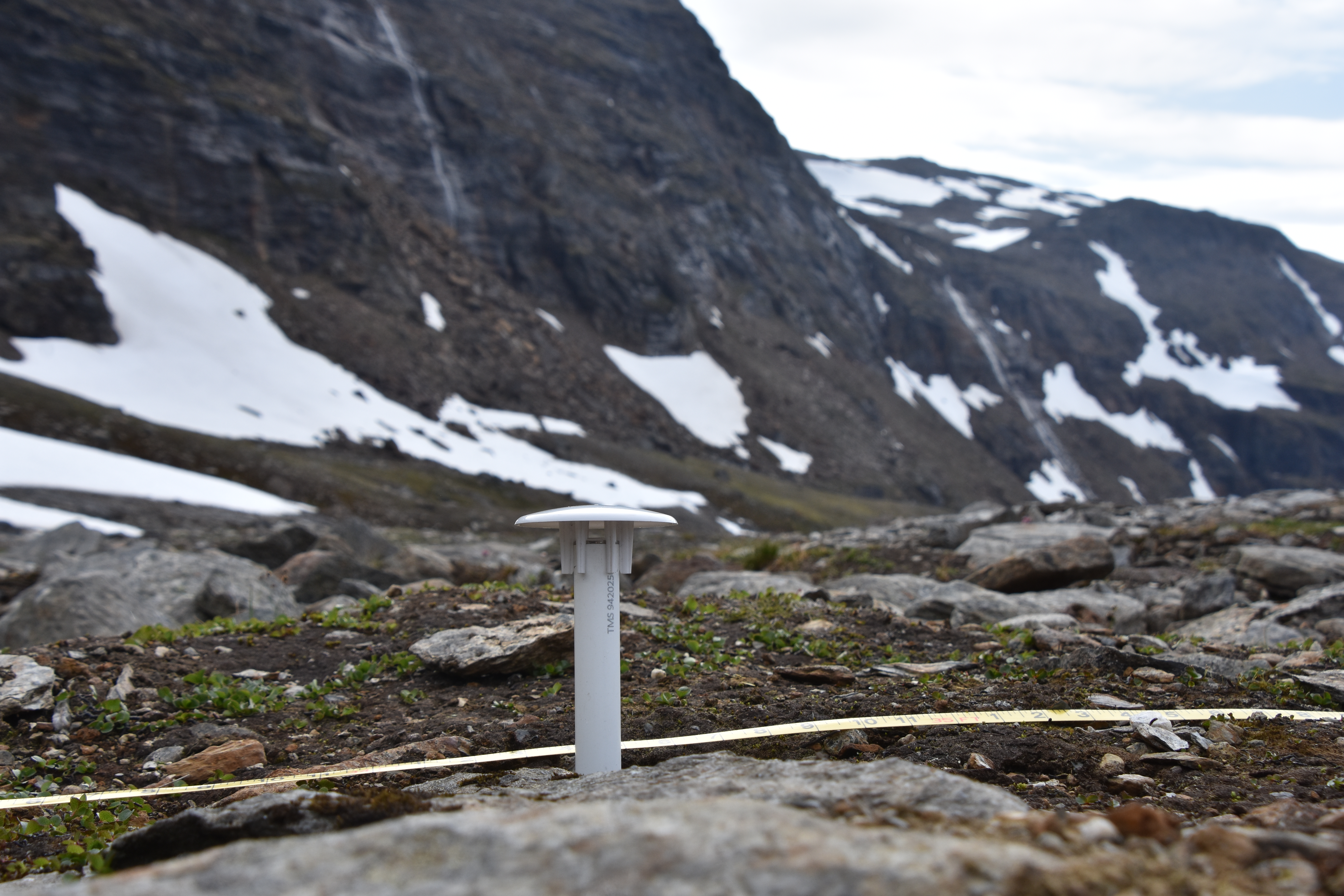
Microclimate sensor towards the top of the Laktatjakka trail. The nival zone is home to just a few species, such as the dwarf willow (Salix herbacea) and the glacier buttercup (Ranunculus glacialis). No home for non-native species, for sure, but never say never!

Meanwhile, Violetta will be investigating belowground, focusing on the crucial organisms known as mycorrhizae. We wonder whether our trails are affecting the mycorrhizal communities to a similar extent as roads do. The prevailing idea is that the impact on these communities will be noticeable but less intense than that observed along mountain roads due to the trails’ lower disturbance levels.
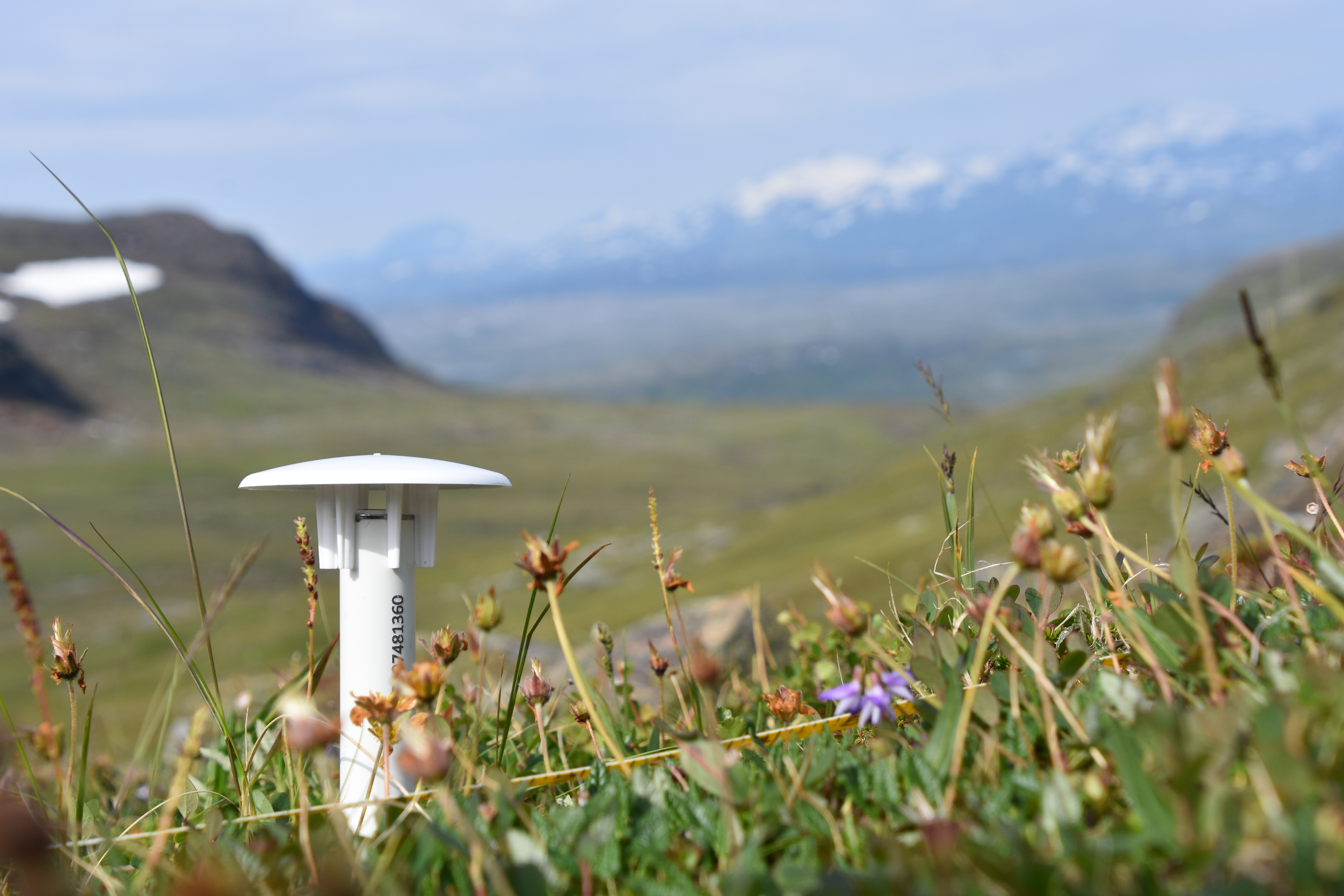
Microclimate sensor overlooking the valley in a typical alpine meadow. Most plants in this meadow are associated with the same mycorrhizal types, but the big unknown is what trail disturbance does with those assocations

Let the journey of discovery begin! Until then, our team will traverse those beautiful slopes in pursuit of botanical wonders, eager to unravel the secrets that lie beneath the canopy.
Posted in Sweden | Tagged , , , , , , , , | Leave a comment

Science at its most adventurous

We had stumbled upon a great treasure, when our colleague Keith, from Abisko in northern Sweden, found an old research paper from the 1950s written by a botanist called Olav Gjaerevoll. This Olav had spent several summers in the 1940s exploring the mountainsides in the northern Scandes around Abisko, during those times when the Kiruna-Narvik railroad line was transporting tons of iron ore to satisfy the ever-iron-hungry Nazi-Germany war machine.

Mr. Gjaerevoll, a passionate botanist, had fallen in love with the snowbed vegetation of the northern Scandinavian mountains. He meticulously classified the different snowbed vegetation types and their association with soil pH and soil moisture.

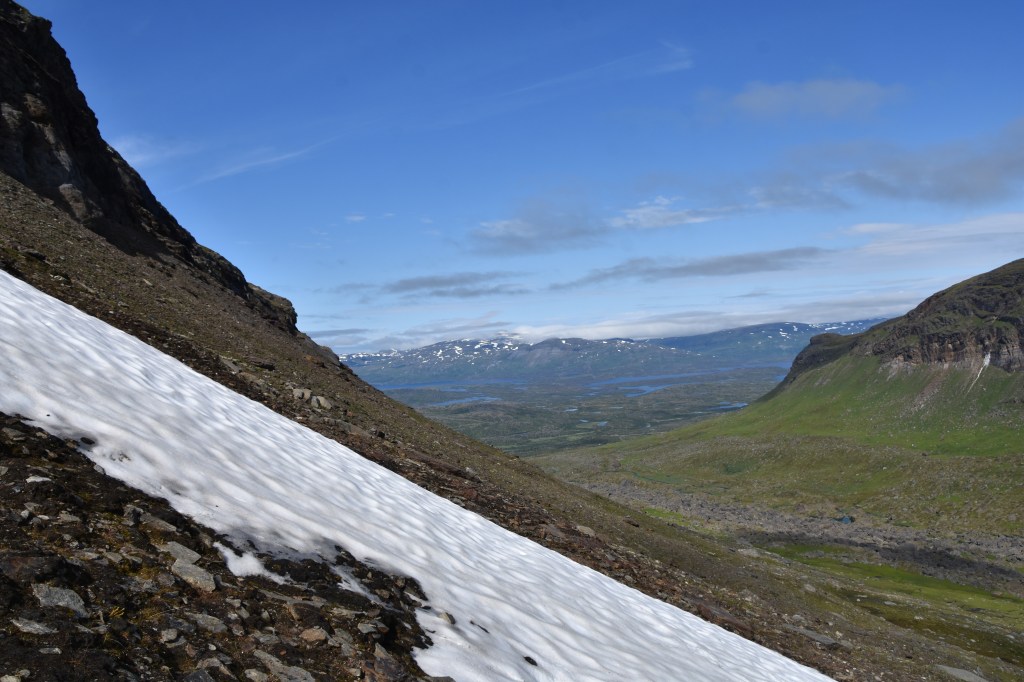
Mid July, snowbeds are still common around 1000 m and higher in the northern Scandinavian mountains. The one pictured here forms the topic of today’s adventurous tale.

Since the 1940s, much has changed. The railroad line still transports tons of iron ore, but the climate in the region has substantially warmed and become more erratic. We became curious about how a resurvey of those snowbeds from the 1940s would look now and how the communities might have changed.

Of course, locating the exact plots was not feasible. Gjaerevoll had provided us with mountain names, orientations, and heights, but that often left us with several snowbeds to choose from. Moreover, he didn’t describe his sampling scheme in enough detail to locate the exact plots precisely. Nevertheless, we were determined to get as close as possible and uncover an interesting story.

Scouting for the optimal snowbed up in the rocky nival zone of the valley

Thus, we embarked on a journey following the faded tracks of this mid-twentieth-century botanist. Our first target was an easy one – a snowbed right underneath the touristic chair lift on Mount Nuolja, next to Abisko. For our second day of adventure, we aimed a bit higher. We noticed that Olav Gjaerevoll had visited a few snowbeds high up on the flanks of the Kärkevagge-valley, the valley of the ‘lake of the trolls’, or ‘Trollsjön’. This trail was highly popular among tourists and led to a beautiful lake at the end of a gentle slope, surrounded by steep mountains on all sides but the north.

It was the perfect season to visit Kärkevagge-valley, with the gentle slopes of the valley covered with a wide diversity of flowering plants. The picture here holds beauties like Astragalus alpinus, Ranunculus acris, Bistorta vivipara, Bartsia alpina, and Pyrola minor as the most common ones.

However, we didn’t just want to follow the tourist track to the lake. Our goal was to reach the steep slopes where the winter snow still blanketed the rocky flanks. Just before reaching the lake, we thus veered off track, ventured into the valley, crossed the stream barefoot, and ascended the steep slopes on the other side.

The only way is through. Extremely cold meltwater, but the best our feet could dream off after a few hours of hiking!

After a brisk climb and some contemplation on ‘what would Gjaerevoll do’, we discovered a lovely little snowbed. We got down close to the ground, just a few centimeters from the snow, to identify the diverse array of centimeter-sized plants that were flourishing there. The sight was astounding – so many Saxifragas, funny little sedges and Luzulas, such pretty millimeter-sized flowers! It was a feast for the eyes!

Ranunculus nivalis, the queen of the rocks in the Scandinavian mountains. One of the last flowers found at the very highest elevation sites.
Luzula spicata, a tender Luzula that has stole my heart
The beautiful white bell-flowers of the ‘moss heather’, Cassiope hypnoides. A plant so small it is easy to confuse with moss, but not so when it’s flowering!

The scientific findings we could make up there will have be the subject of another blog post, as well as a master thesis by our dedicated ‘Olav’ of the present, Brent. Yet the journey had clearly started in a sufficiently epic manner, promising a great project ahead of us!

Snowbed monitoring with a view. You wouldn’t say it from the rocks, but there was a surprisingly large diversity of plant species to be found!
The beautiful purple of Bartsia alpina against the low polar sun.
Posted in Sweden | Tagged , , , , , , , , | 5 Comments

A call answered across the globe

It’s safe to say that last month’s call for microclimate data for our growing SoilTemp database was a success. Almost two hundred new datasets, ranging from just a few sensors to a whopping 32 thousand per dataset, poured into our new SoilTemp email address. All that for a grand total of….

MORE THAN 50.000 NEW TIME SERIES!

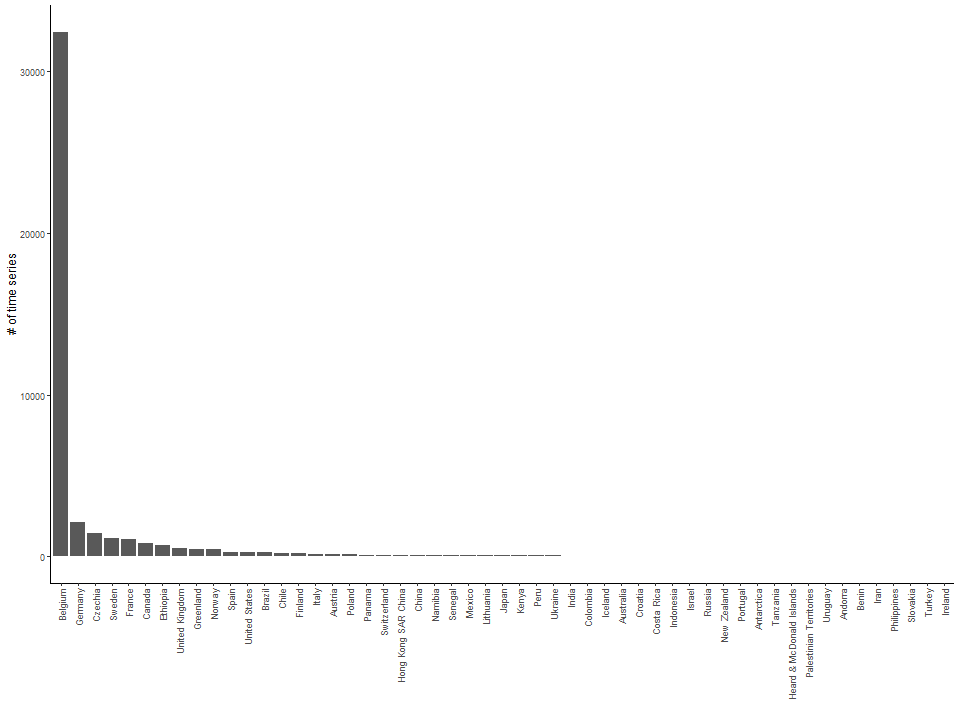
Now, we are putting everything into force to get all that data processed and added to our database. But I already wanted to provide a sneak-peak of the scope of that new data, through this graph of number of time series per country*.

Number of time series per country received during this call for data

The tally contains a total of 53 countries, in itself likely to substantially increase the number of countries we had already in SoilTemp 1.0 (over 70). Maybe at some point, there will not be any comments anymore about our database not being truly global!

Now, there is a ‘little ommission in that previous graph: the new submissions from Belgium (where I am based). There, we made use of an army of citizens to collect that dataset of 32.000 time series mentioned above, an achievement that obviously skews our graph a little bit when added.

Number of time series per country received during this call for data, skewed towards the rather overwhelming submission from Belgium

Now, if you think you have some fantastic data lying around and are sad you missed our deadline, don’t worry! There is a latebreaking deadline on October 20th, for those who are collecting their data over this northern hemispheric summer, and for those who only learn about the initiative now. All data still welcome by then to be included in our upcoming database publication!

*Only for those who followed exactly the submission format, as no further processing has been done, so this is a bit of an underestimation!

Posted in General, Science | Tagged , , , , , , | Leave a comment

Tundra traits

It was summer 2017, the height of my PhD. As always, I spent the longest days above the polar circle, in the north of Scandinavia. We were there to follow up on our long-term vegetation monitoring, in particular this time to do the five-year resurvey of the roads we are tracking there for the Mountain Invasion Research Network. Little did we know that amidst all the data collection, a side project involving leaf harvesting would eventually lead us on an unexpected journey.

The summer of 2017, spend in the eternal sunshine of a sunny northern Scandinavian July, doing what one should do on such an occasion: botanizing!

We also harvested a bunch of leaves, that summer. Our goal? To examine plant traits across various elevations and explore the impact of roadside disturbance on these traits. Our dedicated master student, Amélie, crafted a fascinating thesis, full of intriguing discoveries that unfortunately remained buried in the shadows, as so far too often the case with master theses.

However, our leafy escapades did not go in vain. We decided to contribute our precious data to the Tundra Trait Team-database, led by the indomitable Anne Bjorkman from the University of Gothenburg in Sweden, making them a vital building block for a global dataset of tundra plant traits.

Beautiful leaves – here of Betula pubescens – going under the scanner to assess their size

Now, that global database has resulted in a new and exciting study, freshly published in Nature Communications. The idea was to combine this large database with species distribution data, and hopefully predict which species would emerge as champions or casualties in the increasingly-changing climate of the tundra. The hypothesis was that it would, as one can expect certain kind of species – with certain traits – to benefit disproportionally more or less from changing climatic conditions in the tundra than others. For example, all signs point into the direction that taller plants would increase significantly in cover at the expense of short-stature ones.

Tall plants – here Valeriana sambucifolia – were expected to profit from a warming climate in the tundra, yet the findings do not confirm that hypothesis.

Now, was that a bit of a disappointment! Our initial hypothesis, built upon the pillars of previous literature, proved too simplistic for the complex world of tundra shrubs. Instead of consistent trait responses, we discovered similar values of height, specific leaf area, and seed mass among both range-expanding and contracting tundra shrub species. Mother Nature is known to love her surprises!

Who wins and who looses in a changing tundra is a complex matter. Our paper helps to adjust our expectations in that regard! Photo: Rubus chamaemorus, the cloudberry.

Importantly, projected range shifts will thus not lead to directional shifts in shrub trait composition or variation, as both winner and loser species share relatively similar traits.

As usual, of course, there is plenty of room for improvement. Our study highlights the need to explore other morpho-physiological traits for which sufficient data remains elusive, and to address how demographic processes might mediate tundra shrub range shifts.

Leaves are beautiful, and fun to work with. But perhaps the answer to our question could be found underground! Time to give more prominence to root traits in future global research as well!

In our quest to uncover the future winners and losers of climate change in the mesmerizing tundra biome, we’ve encountered a few unexpected twists and turns. It’s as if these plants are whispering, “Don’t judge a shrub by its leaves!” The observed and projected abundance changes and range shifts will thus interestingly enough not lead to major modifications in shrub trait composition, since winner and loser species share relatively similar traits. So, as a scientist, I’m happy to shout out as a conclusion: “oh boy, is it complicated!”

The tundra is changing, and rapidly, let there not be any doubts about that. Yet, it has been less straightforward to predict how that future tundra vegetation might look than ecological theory suggested.
Warming a cup of tea on the campfire at our hut in the Norwegian mountains in the summer of 2017
Posted in Norway | Tagged , , , , , , , , | Leave a comment

Species on the move

‘Species On The Move’: It’s a conference name with a ring to it. Its goal is to bring together scientists and conservationists around the topic of the impact of climate change on species distributions. This third edition was held in a fancy Floridian hotel bordering the Gulf of Mexico, and the topic felt more pressing than ever.

Pretty surrealistic view of the hotel hosting the SOTM-conference, embedded in the mangroves on the coast of the Gulf of Mexico

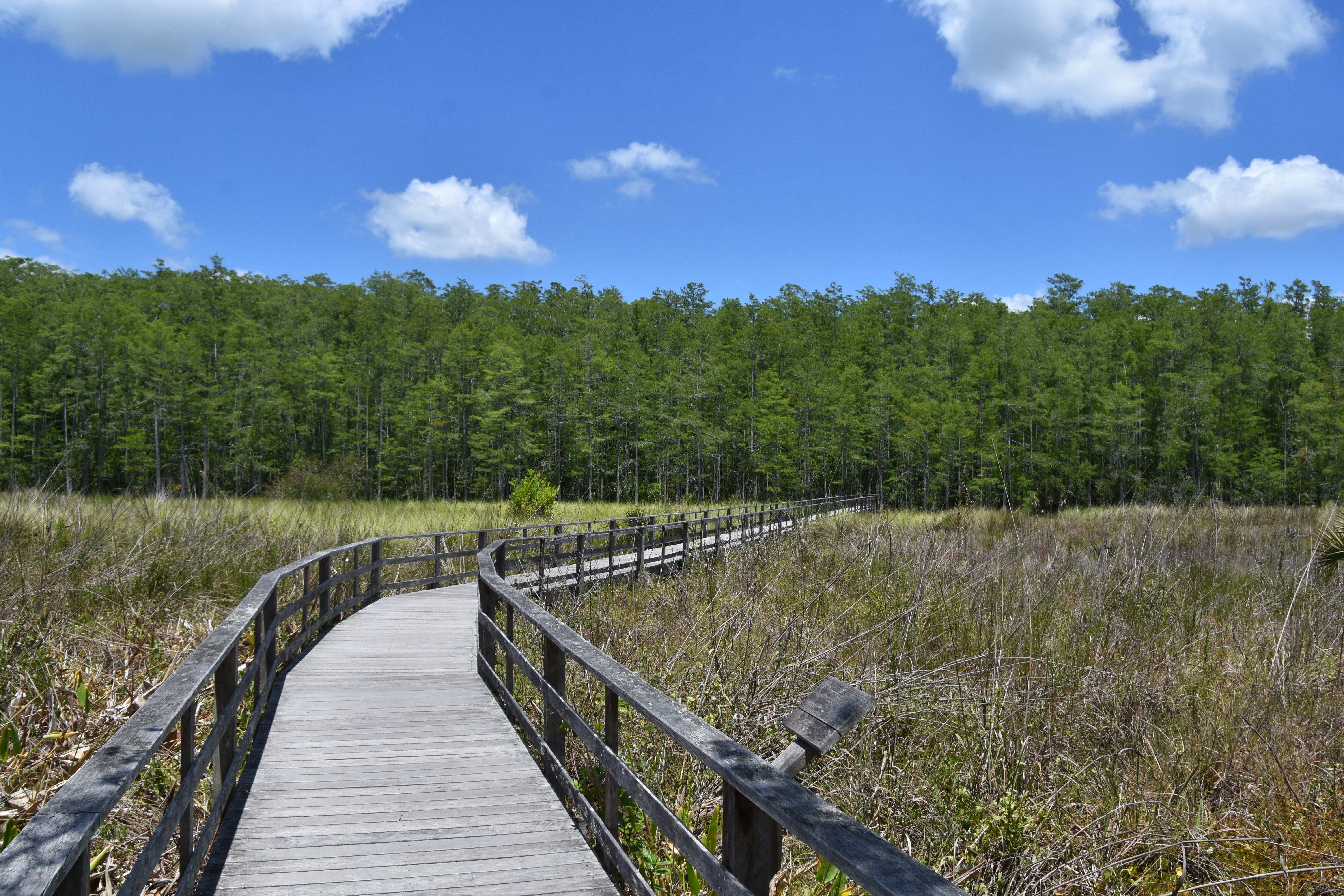
Corkscrew swamp, with some of the last remaining old cypress forests of Florida, set the scene very well for our conference

For one, the surrounding area in Southwest Florida excellently highlighted some of the main messages of the meeting. Florida is a state packed with wildlife and rare plants but is also a state with an astoundingly rapid expansion of human settlements, with little to no regard for the idea that land may have its limits. As a result, there were turtles in the parking lots, crabs on the road, and manatees in the marina, but also all water drained from the protected marshland surrounded by rapidly expanding human settlements.

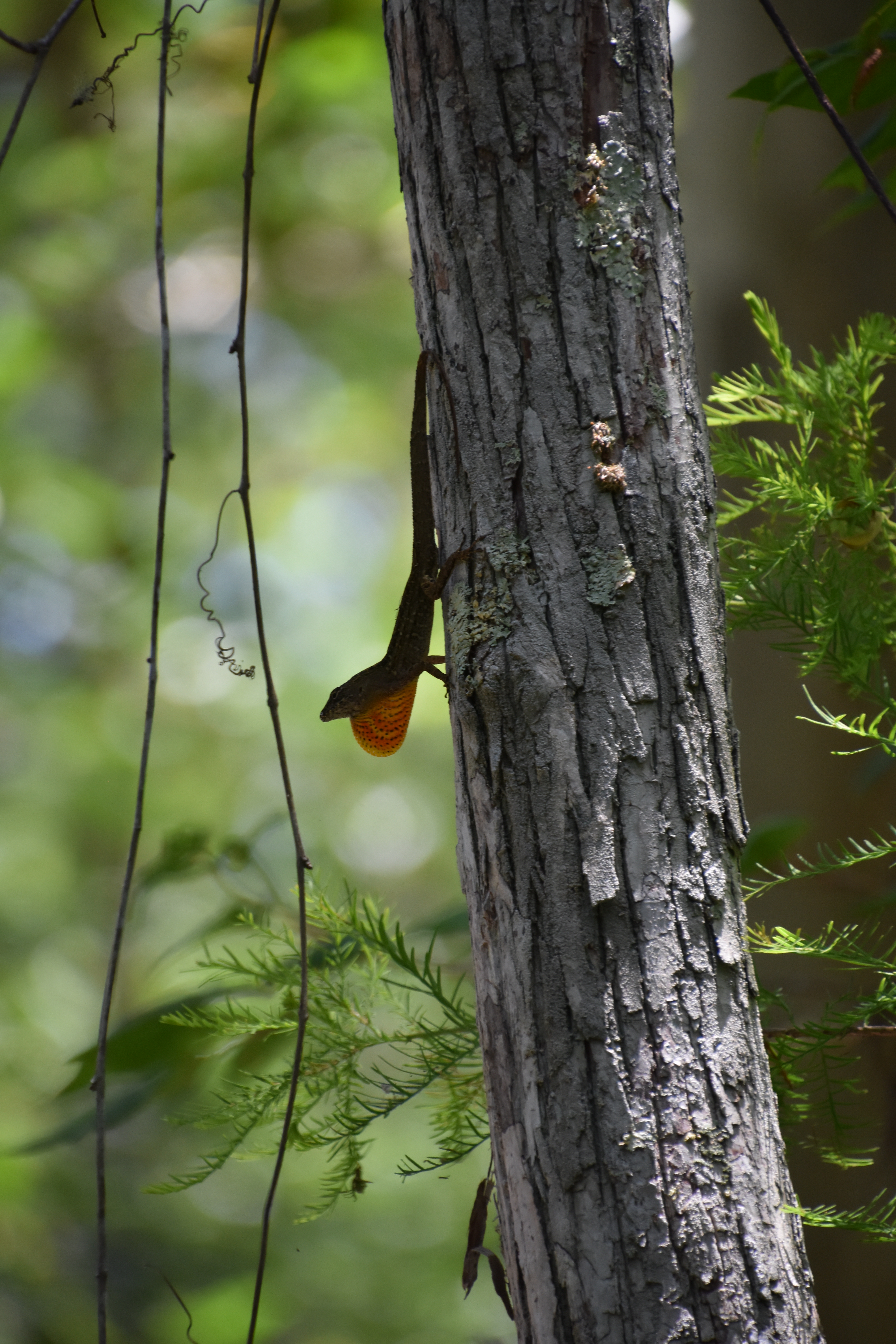
Beautiful native green anole lizard, one of the countless animals one can admire in Florida
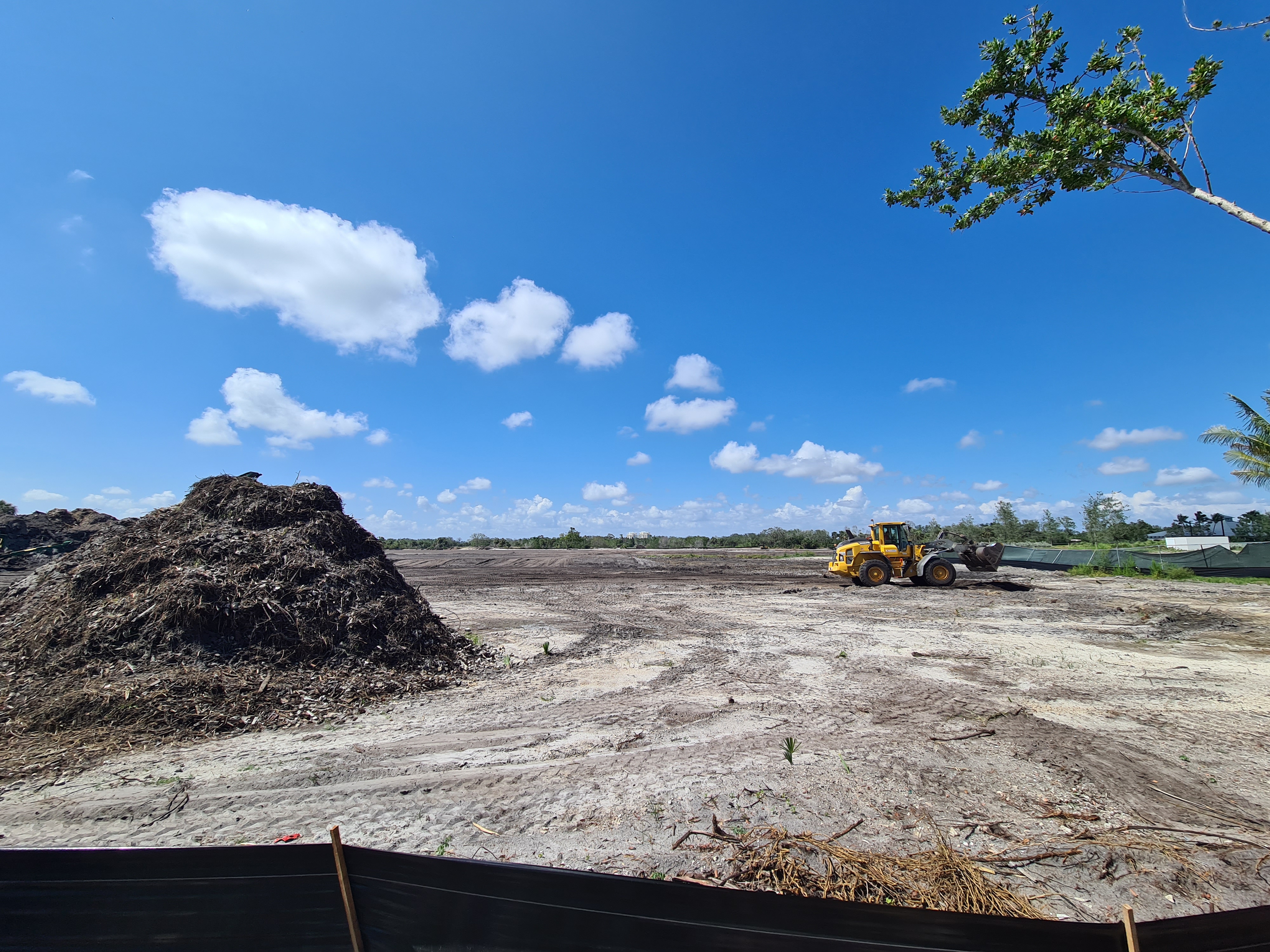
Urban expansion everywhere! Here another piece of mangrove removed to be turned into a hotel

These obvious human-nature conflicts reminded me of one of the recurring topics of the conference: most of the time, species are NOT moving as predicted based on climate change, and one of the many reasons is that they simply CAN’T. They lack the natural corridors to reach areas with ideal (micro)climatic conditions, as they are locked on tiny islands of nature in an anthropogenic ocean. This issue of connectivity has only recently been revisited in the research on species redistribution (although the problem of connectivity itself is, of course, widely known), as until now we simply lacked the data to test this thoroughly. Together with the whole story of why species are not moving as they ‘should’, a topic that we urgently need to keep working on as a field.

Determined-looking turtle in a parking lot at the edge of a nature reserve
Ibis simply ignoring the beach-goers.
Black vultures feasting on dead fish after a pond dried up. The rainy season was delayed, and drainage doesn’t help, but this annual drying up of ponds – to the delight of vultures – is not that unusual, I understood

A second way in which Florida screams ‘moving species’ at you is through its vast collection of non-native species. I saw a bunch of lizards (and each of them got me excited all over again), but it turned out that many – if not most – were not native to the region. The spread of non-native species is a topic that has obviously been widely discussed in the literature already but, it turns out, largely separated from the ‘species on the move’ literature. There were indeed very few invasion ecologists at the conference, despite the strong overlap in interests! Taking a look at the lessons learned in invasion ecology and how they do and do not apply to the new situation at hand for climate-driven species redistributions would also help us substantially move forward!

Non-native anole showing off its ‘dewlap’

This is just a glimpse of the many important issues that came to light at the conference. Luckily, there was an atmosphere of creative enthusiasm, and I felt like we collectively made six months of progress in a span of mere days. I am confident you will hear more about our achievements in Florida in the near future. And that’s crucial, as species movement is only just gathering speed!

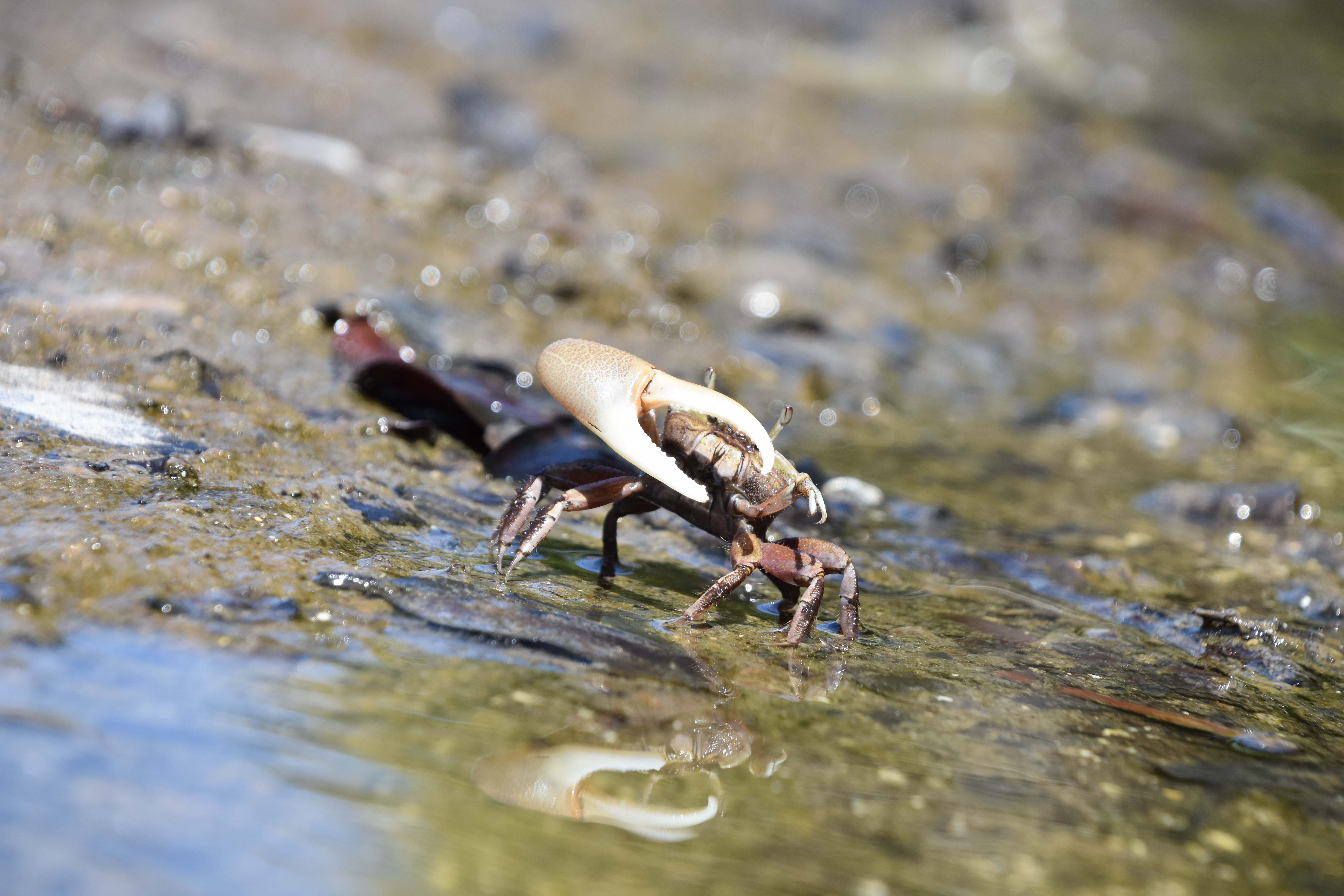
Little crab determined to fight me if I would come any closer. Many species are punching above their weight, but the fight is only getting harder. Conferences like this one are crucial in our search for practical solutions to the problem of moving species that our world faces – and increasingly will face. (Note: there was a lot more talk about solutions than I’m touching upon in this blogpost – but I’ve always been more on the theoretical side myself)

Posted in USA | Tagged , , , , , , , | 3 Comments

Does microclimate change move species?

With 200 or so we came together, here in the scorching heat and relentless urban expansion of southwest Florida, to talk about ‘species on the move’.

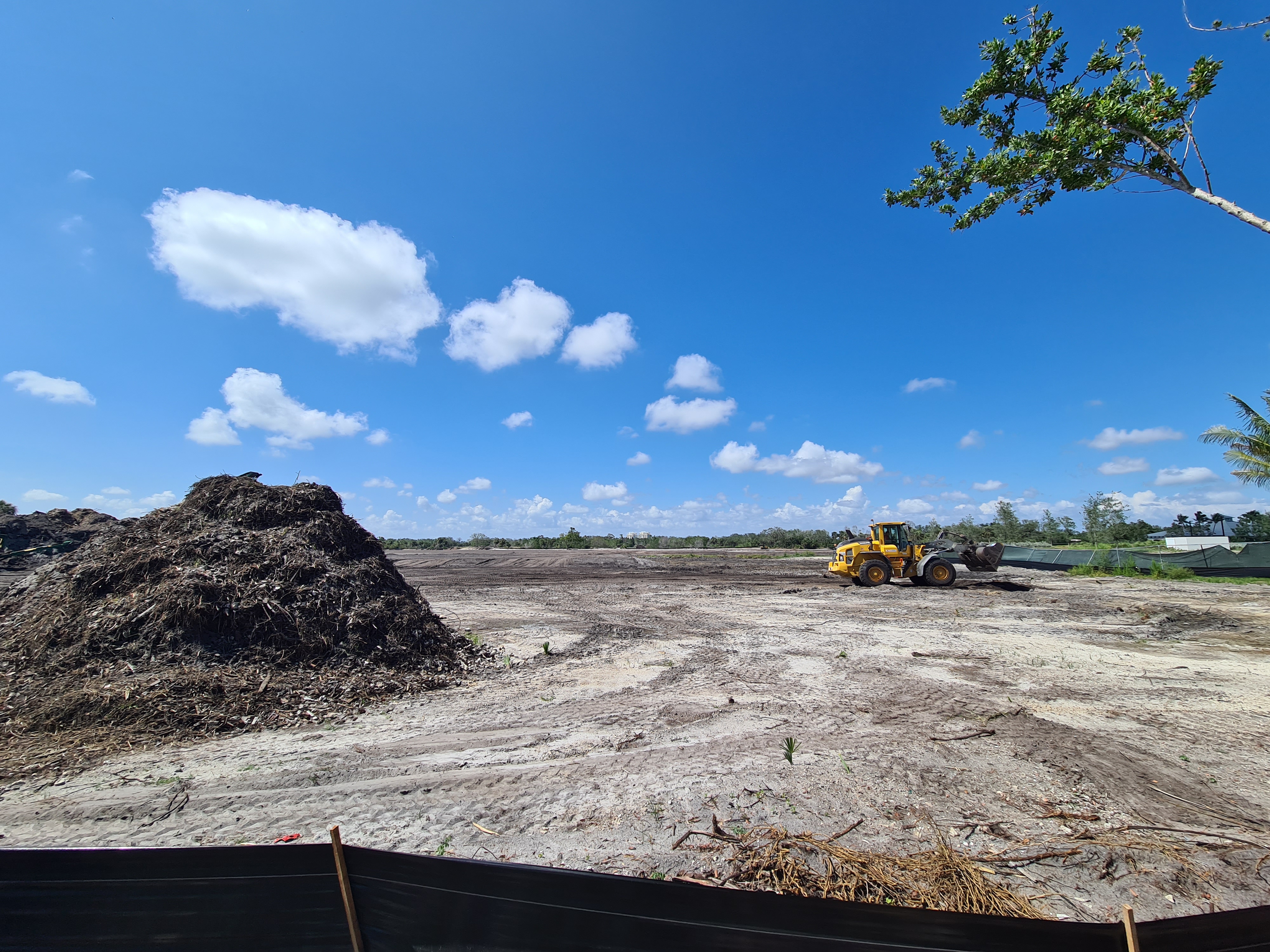
How an unfortunately large part of southwest Florida seems to look nowadays. Imagine the extreme microclimates in these non-habitats!

Global change is pushing species from all sides, forcing them out of their traditional ranges into new ones. With ‘SOTM’ already at its third edition, this issue has only become more urgent. Species range shifts are picking up speed, increasingly moving into uncharted territory, and causing a complicated reshuffling of biodiversity. Yet there is something intriguing about these species range shifts: there are only very few that are tracking climate change as predicted. Many terrestrial species are lagging behind climate change, or even moving in unexpected directions.

Corkscrew swamps and marshland, original Floridan wetlands

It is in this context that I’ll be giving a keynote lecture on Friday on the role of microclimate in the matter, as it seems to be that microclimatic heterogeneity could be taking away a large part of the need for species range shifts: thanks to microclimate, species often have to move only a few kilometers to find the climate conditions they are looking for.

However, these microclimates are also warming! Problem is, we don’t know yet how fast. My work focuses on getting that question answered: how fast is microclimate changing, and how can we best slow down that changing climate?

Forests buffer microclimate. Question is, will they also be able to buffer microclimate change? Strangling fig on a cypress tree in Corkscrew Swamp Sanctuary

For this, we need lots of data! The SoilTemp database is that source of data, and we just launched a massive new call for data. So, if you have microclimate data, consider submitting it to our database! If you’re at the conference and have questions about SoilTemp, data submission, or microclimate in general, I’m organizing an informal session during the coffee break on Friday, at 10h00, in Calusa B!

Posted in USA | Tagged , , , , , , | Leave a comment