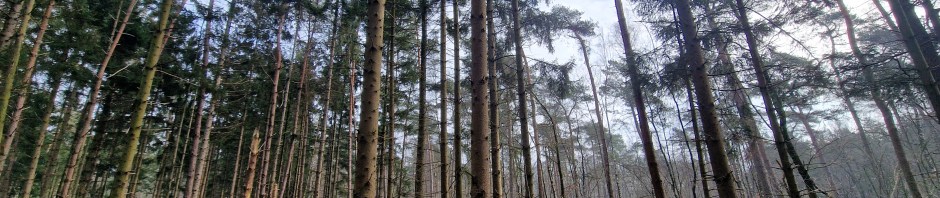
So, where in Flanders does it still sound nice?
A simple question, perhaps. But one for which the data has long remained elusive. Sound is a complex, multi-dimensional beast, and capturing how people actually experience it is not straightforward.
In a new paper stemming from De Oorzaak and led by Ablenya Barros, we now take a stab at answering that question. We asked close to 4000 citizens across Flanders to take a short walk outside, listen closely, and report how they perceived the soundscape around them, including which sound sources they heard.
Pretty simple, right?

For participants it took only a few minutes, but the resulting dataset is a gift that keeps on giving. In this newest paper, we threw a machine-learning model at the data to disentangle the spatiotemporal context behind people’s perception: why do some places and moments sound pleasant, while others do not?

In essence, we ran two analyses.
The first focused on the role of sound sources in defining two key soundscape metrics: pleasantness and eventfulness (the official descriptors used in soundscape research). As expected – and consistent with earlier work – these models performed quite well. Pleasantness correlated strongly and negatively with traffic, industry, construction noise, alarms, and priority vehicles. On the positive side, natural sounds and silence clearly improved perceived pleasantness. Human sounds and music were more divisive: a little can be enjoyable, but a lot of either was often perceived as unpleasant.

The second analysis looked at the geospatial context of these soundscape experiences. This is where the real novelty lies, because it helps us identify where problems occur and which spatial factors might help solve them.
These models were less predictive than the first ones, which makes sense. It has shown to be much easier to link people’s subjective soundscape experience to the sound sources they report themselves than to the messy complexity of the real world. Still, similar patterns emerged. Proxies of traffic, such as road network density and distance to highways, explained a large portion of the variation in soundscape experience. Meanwhile, a higher percentage of green space in the surrounding area increased perceived pleasantness.
Interestingly, road density and nearby green space also influenced eventfulness. More nature and fewer roads generally resulted in a less eventful environment – and those quieter environments were typically perceived as more pleasant. One could think that eventfulness would be appreciated as well, but in general, we’re all really looking for the sound of ‘boring, quite nature’.
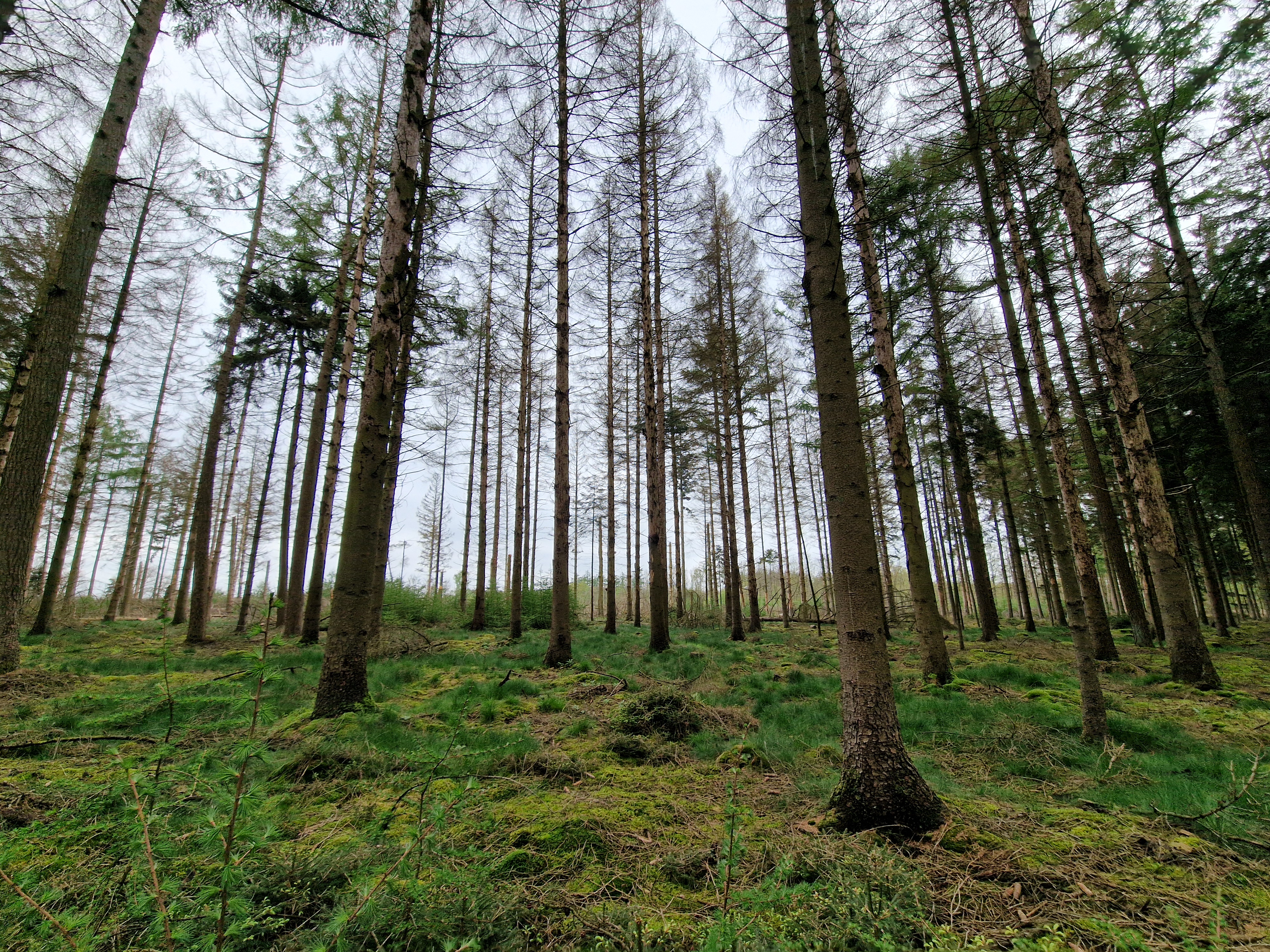
Putting all this together allows us to do something pretty cool: predict where in Flanders soundscapes are likely to be most pleasant.
The role of nature is clearly crucial. More green space within a 500-metre radius around you significantly improves the soundscape experience. But there is an important catch: if that same 500-metre buffer is filled with roads, the positive effect of green space essentially disappears, as shown in the figure below.

So yes – green helps. But only when it is sufficiently far from road traffic.
Again and again we thus see the disruptive effect of traffic on our soundscapes. But we also repeatedly see the positive role of greenery – even if it often struggles to compete with the dominance of traffic noise.
Clearly, there is still work to be done to improve our soundscapes. Luckily, we have not only identified the problems but also proposed solutions. Recently, we published the 200-page final report of De Oorzaak (in Dutch, unfortunately). It contains an extensive section with policy advice and recommendations on how to create healthier and more pleasant soundscapes across Flanders.


 The 3D lab