Our EcoFracNet biodiversity monitoring project is gathering momentum. Over the past months, we’ve been roaming the Netherlands, clipboards in hand, from endless heathlands to city parks, to record plant diversity in hundreds of 1 m² plots. With several hundred plots under our belt, we’re starting to get a sense of what’s out there.
And one thing is clear: we’ve met a lot of monocultures.

Sometimes it’s a square meter with just one or maybe two plant species in them. Sometimes those monocultures stretch as far as the eye can see. But even a monoculture isn’t always what it seems.
We’ve seen Lolium perenne carpets dominating farmland.
We’ve waded through dense stands of Juncus effusus in heathlands.
We’ve recorded forest floors so acidic that no understory species survives.
We’ve found stubborn patches of Poa annua pushing through cracks in concrete jungles.
When low diversity hides a surprise
However, not all monocultures tell the same ecological story.
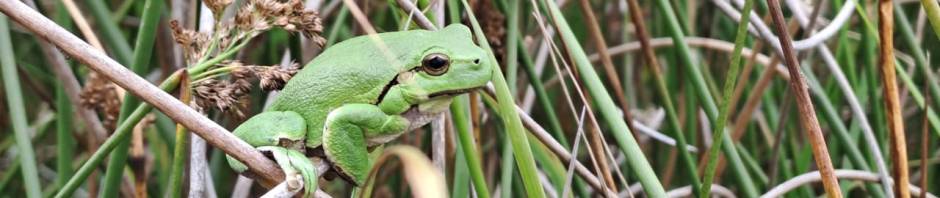
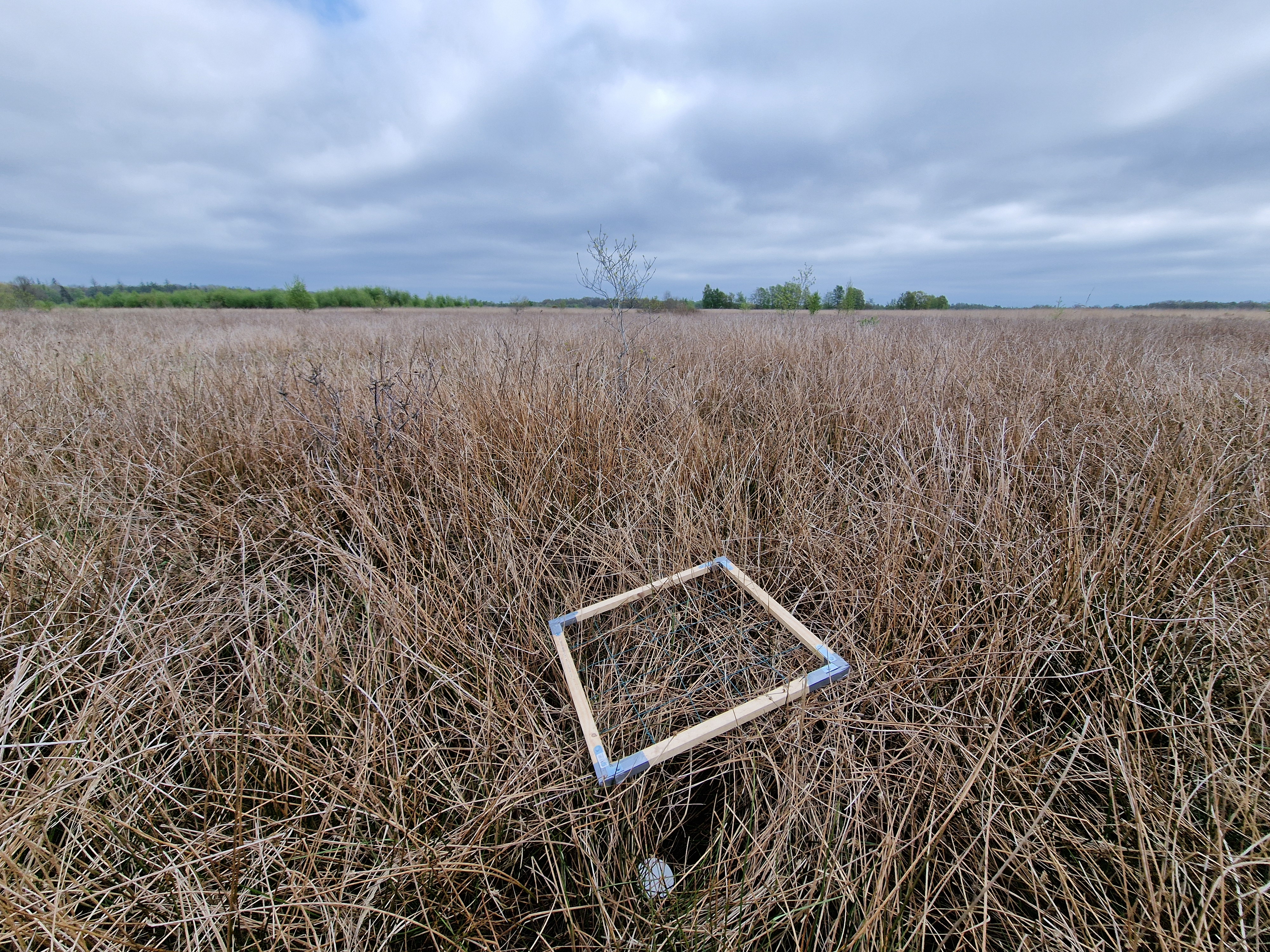
One of my all-time favourite plots was a dense Juncus field in the Fochteloërveen. Just one boring square meter of Juncus in a see of Juncus, surrounded by Juncus… But then, in that montoneous sea, we spotted a small, bright-green jewel among the rushes – a tree frog, a rare amphibian I had simply never seen before, and right there inside our plot.
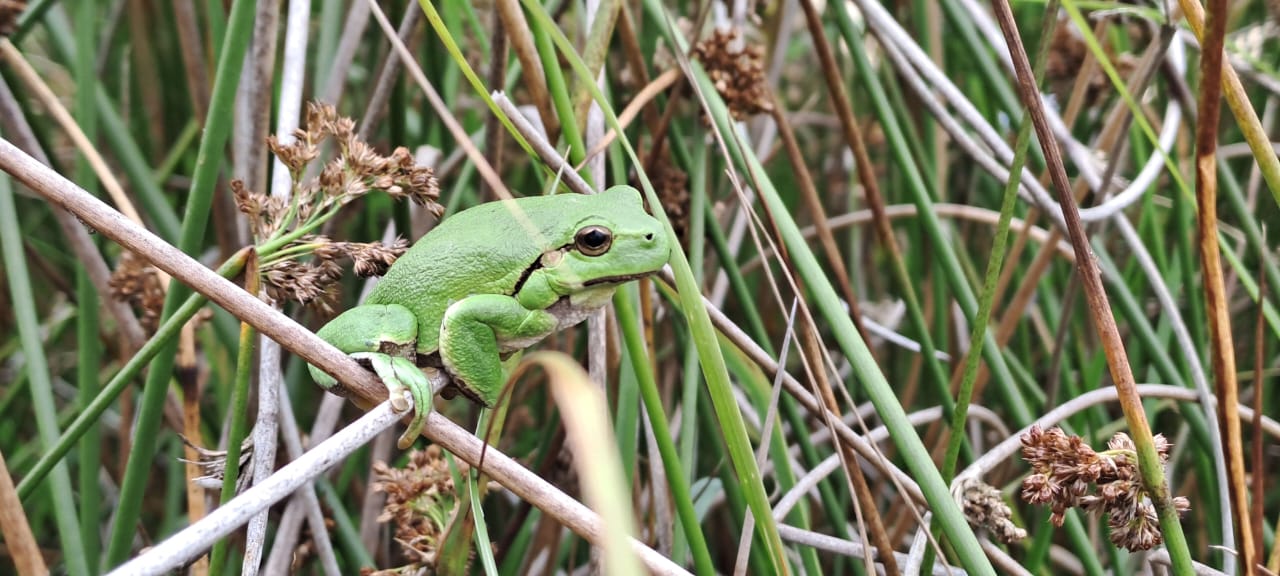
That encounter was a good reminder: low plant diversity doesn’t always mean a lifeless ecosystem. In the Fochteloërveen, the oftentimes poor vegetation still hosts a rich community of animals and soil microbes. But in other places – like in the middle of an intensively managed farmland – a monoculture might be the symptom of an ecosystem stripped of complexity from top to bottom.
Looking beyond the plants
At this stage, we don’t yet know which is which in most of our sites, as any site can surprise you in both directions. That’s why the next steps in EcoFracNet are so important. Future field seasons will expand beyond plants to include animal monitoring, soil biodiversity sampling, and measures of ecosystem functioning. That way, we can piece together how biodiversity at different scales contributes to the way ecosystems work — or don’t.

A question for you
All these monocultures made us curious: where in the Netherlands would we find the highest plant diversity?
We’d love your suggestions – especially if you know great spots in Zeeland or Utrecht.
And if all this sounds intriguing, you can still join EcoFracNet and help monitor your favourite patch of nature. Whether your site is a botanical treasure trove or a stubborn monoculture, every plot adds a valuable piece to the puzzle!


 The 3D lab