
Not all fieldwork pictures are equally breathtaking. While part of our team waded through the muddy mud of De Driehoek – one of our university campus’s last patches of nature – another group embarked on a rather more inspiring mission: retrieving microclimate sensor data from the cliffs of Freyr, Belgium’s highest rock wall. The pictures I received from them, made by photographer Kobe Burdack, might just be what you needed to want to join the project…
Last summer, as part of our MIREN Rocks project, we – well, not me… – monitored plant biodiversity on these cliffs to study rock vegetation worldwide. Our research explores the impact of climbing, species diversity, and the role of rock microclimates in shaping these unique ecosystems.

To track temperature fluctuations, we use TOMST Thermologgers, securely mounted to the rock face. These sensors are read using a Juniper Systems Mesa 2 field computer—compact enough to be carried to heights of more than 100 meters! However, installing them was far from simple. Unlike in more accessible terrains, this task required rope access techniques, high-quality climbing gear, and a reliable mounting method—eventually, drilling a hole proved most effective.
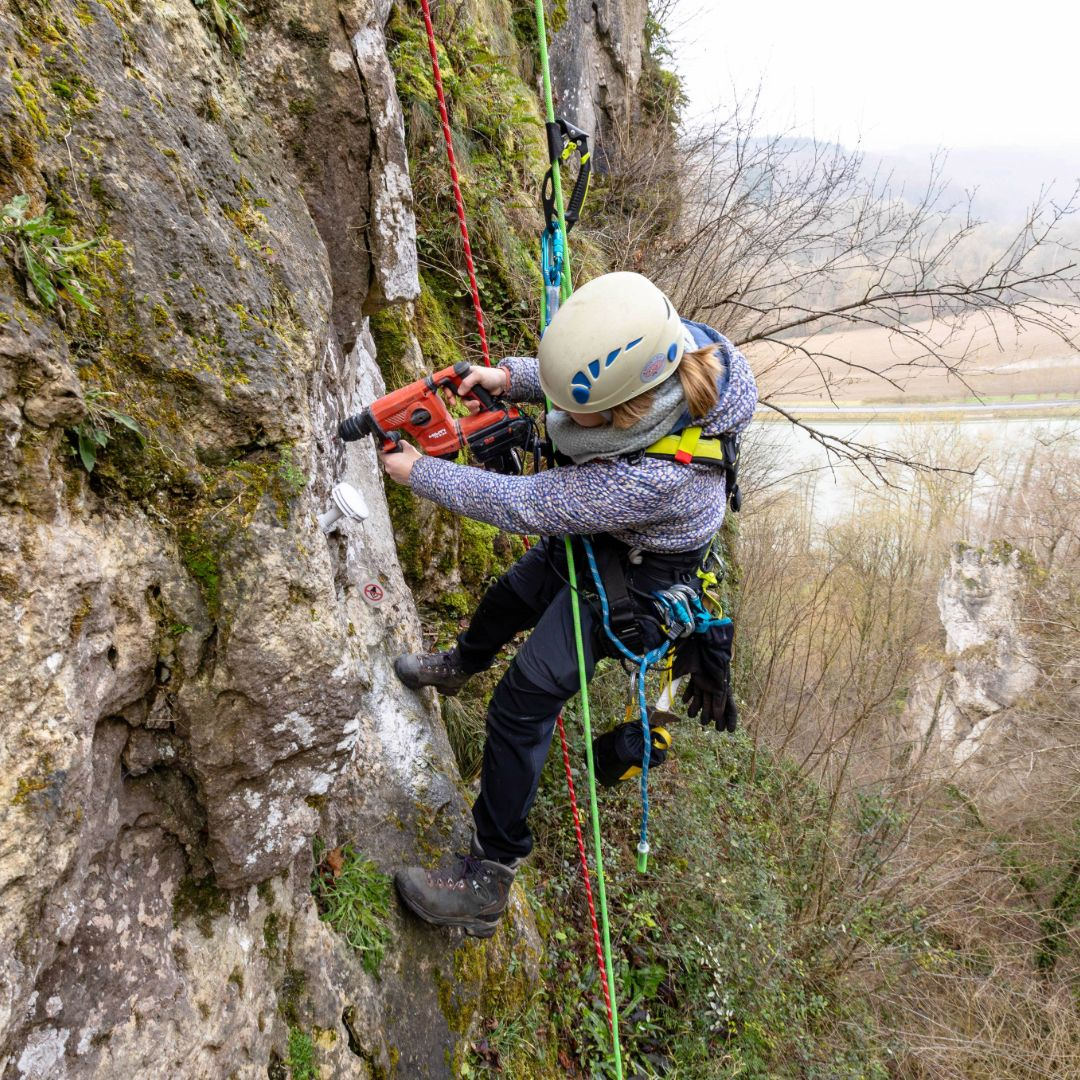
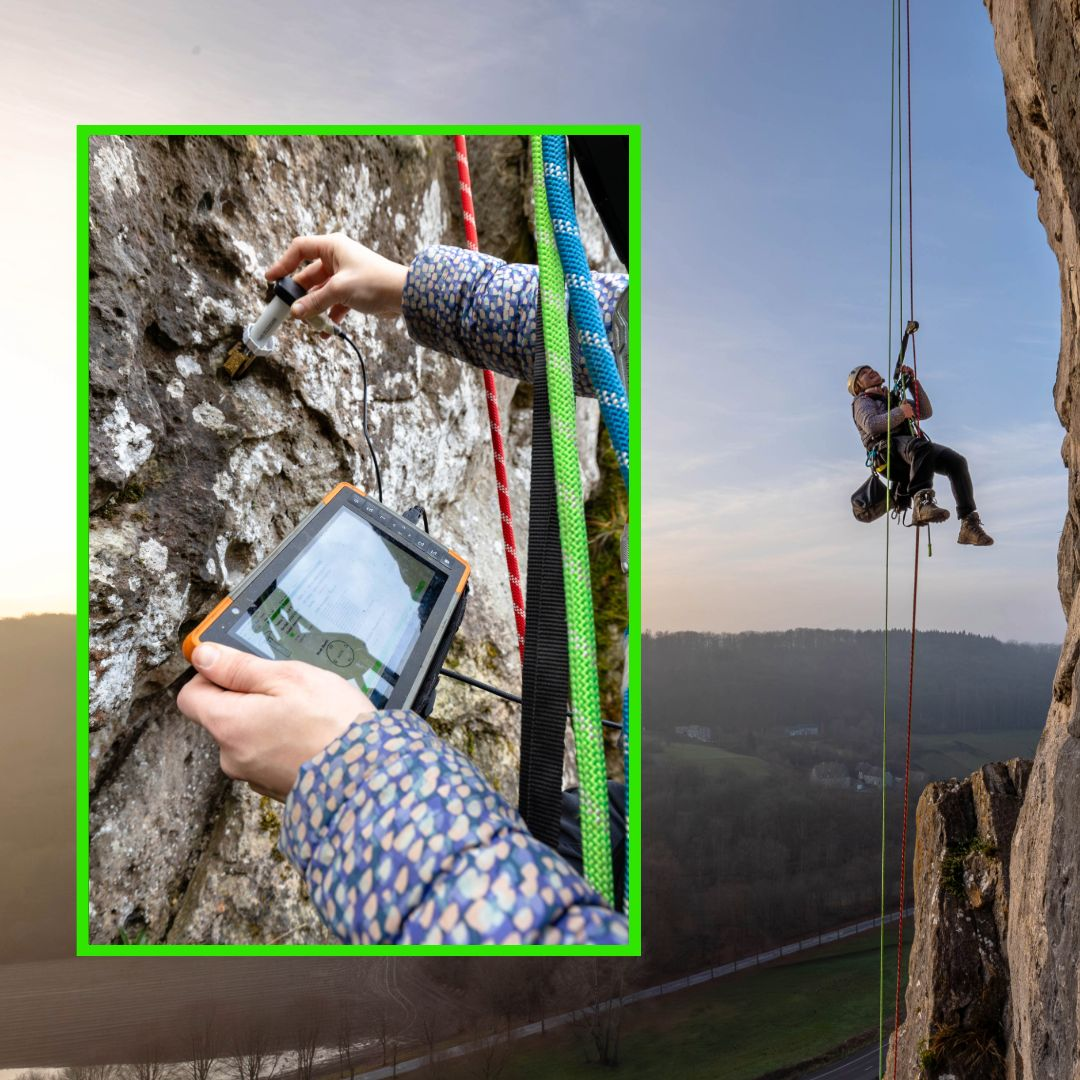
The MIREN Rocks project is always looking for new participants to expand our surveys to rock faces around the world. Do you have a background in ecology or botany, and are you comfortable climbing or working at heights? Join the survey! Visit our website for more details: https://www.mountaininvasions.org/miren-rocks


 The 3D lab