Translation of the submission for the pop-sci writing competition ‘Vlaamse Scriptiepijs’ by team member Sarane Coen
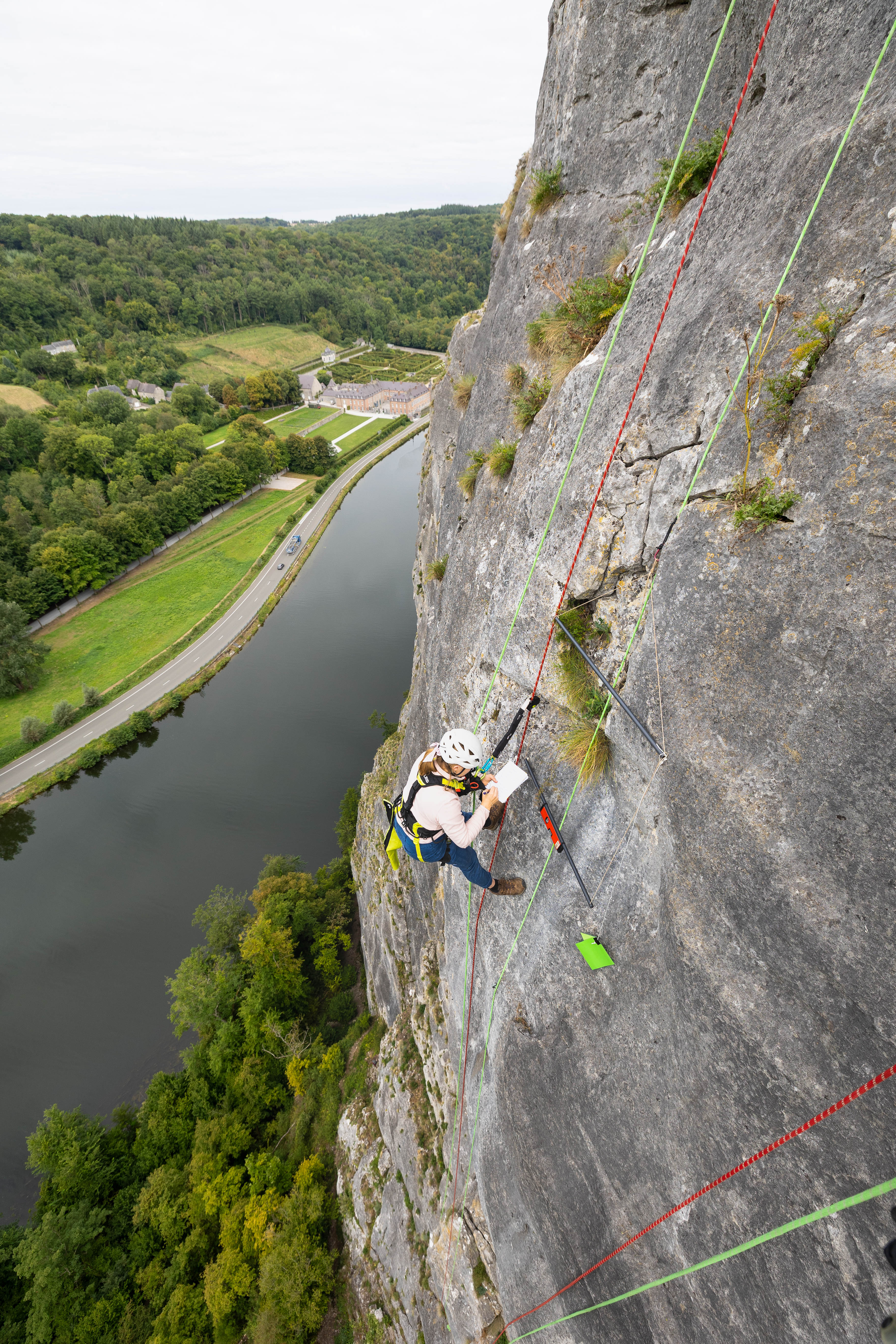
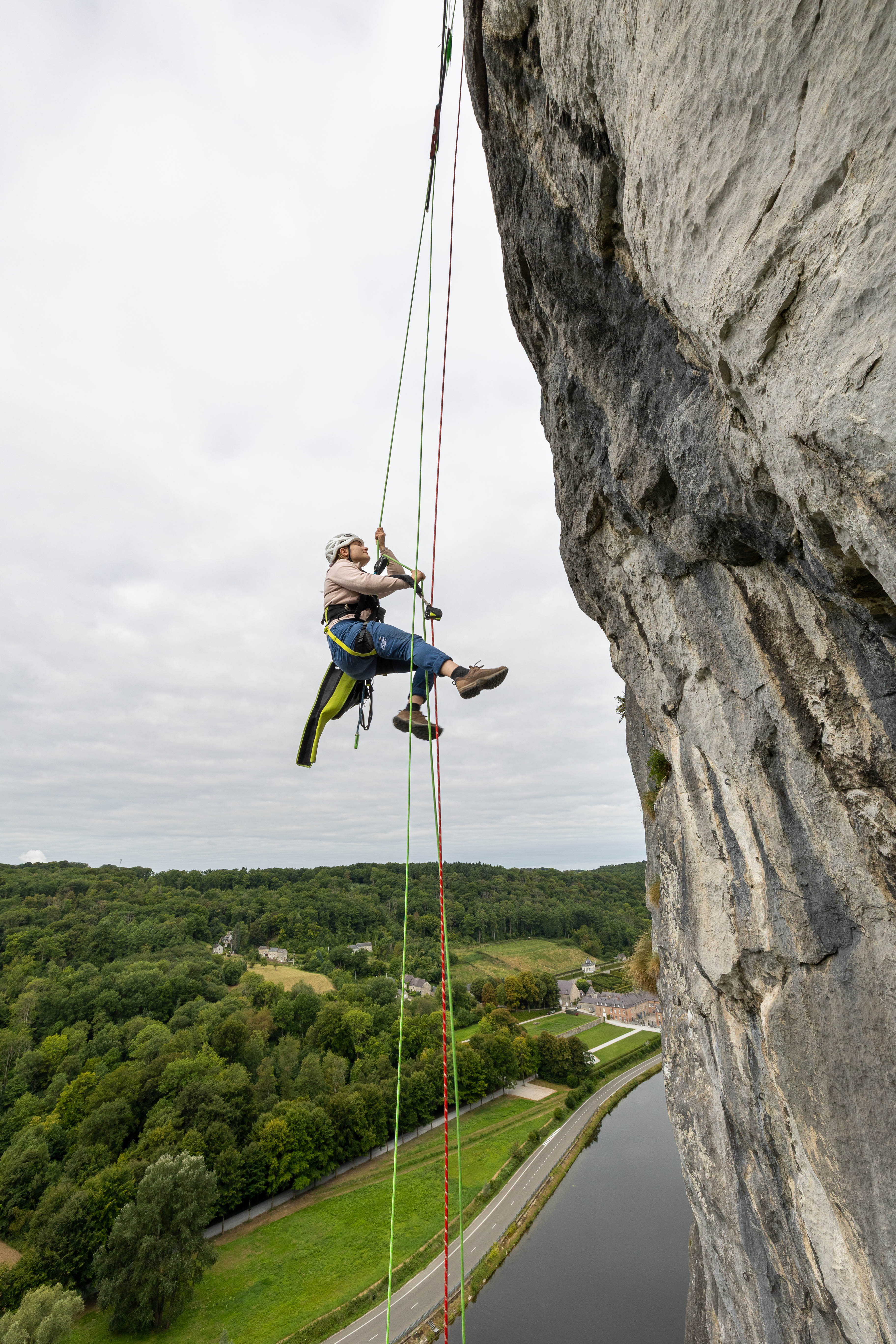
With the River Meuse flowing far below, I search for the way up to the top. With fingers and toes, I follow a route of small cracks and ridges in the rock wall. For me, these are holds; for plants, they are habitats. Where I grip, they fight to survive. That thought stuck with me.
Am I, as a rock climber, a threat or a treasure to the ecosystem I love so much?
With that question, my master’s thesis research began. I returned to the rocks. This time not only as a climber, but also as a scientist.
Bursting biodiversity
At first glance, cliffs may seem like barren walls. But in reality, they burst with life. Rocks are rich ecosystems full of rare species that endure extreme conditions: steep faces with almost no soil, nutrients, or water.
For me, these are holds; for plants, they are habitats.
Cliffs offer a wide range of living conditions because they vary greatly in height, structure, and orientation toward the sun. These differences create a diversity of microclimates. North-facing walls or deep, shaded crevices remain much cooler and moister than sunny south faces. Cliffs thus form a mosaic of tiny habitats where each species finds its ideal place to live.
Research on a high level
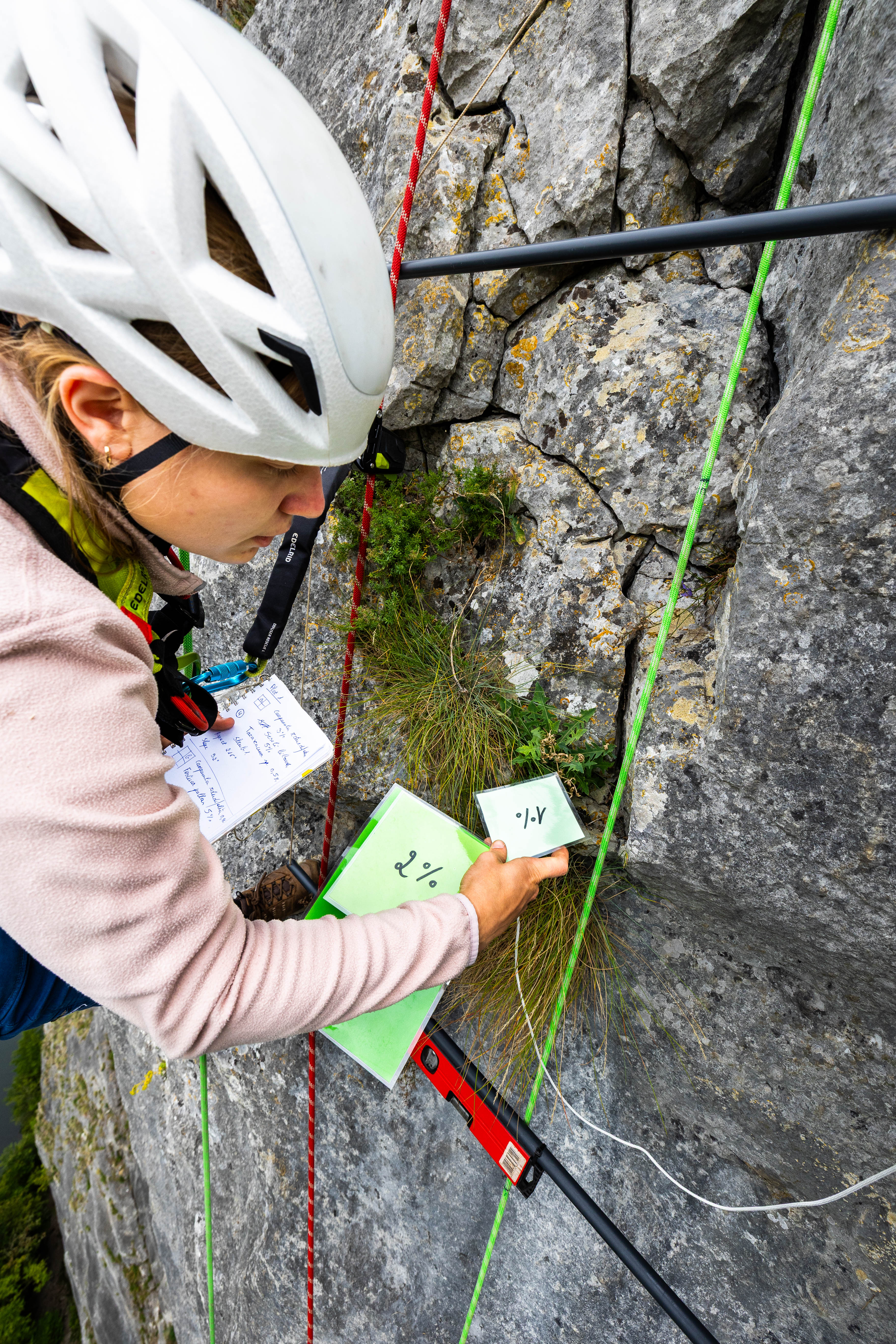
Helmet, harness, rope, check! One last look into the depths and ready to descent. With my research material, I dangled along the steep rock walls on the banks of the River Meuse in the Belgian Ardennes to collect data.
To understand how climbing influences these ecosystems, I looked at the plants on unclimbed walls and lightly and heavily climbed walls. Within one-square-metre plots, I recorded which species were present and how much space they occupied. I also measured the characteristics of the rock itself: surface structure, slope, height, and sun orientation. In total, I conducted these measurements across 248 separate square meters, spread over multiple cliff faces. Bit by bit, I untangled not only my ropes, but also some ecological questions.
Climbers, unexpected buddies of biodiversity!
The structure of the rock surface turned out to be crucial. Smooth walls offer little opportunity for plants, no matter how often they are climbed. The more cracks, ridges, and holes a rock has, the more suitable microhabitats it provides — and the more plant species can find a place to grow.
A bit of disturbance can make space for more biodiversity.
And climbing? Moderate climbing intensity did not harm biodiversity — it even seemed to enhance it. Lightly climbed cliffs hosted the highest diversity compared with both unclimbed and heavily climbed sites.
The type of plants explained this pattern. On unclimbed cliffs, I mostly found dominant, competitive species that monopolise nutrients and water. On climbed cliffs, more disturbance-tolerant species appeared. Climbing partially reduced the dominance of the competitive species, giving others a chance to establish themselves. A bit of disturbance can make space for more biodiversity.
Safe spaces for the future
These results reassure me as a climber. Fortunately! Because these fragile cliff ecosystems may play a key role in the climate and biodiversity crises. Their variation in microhabitats with different temperatures makes them cool refuges for species that can no longer tolerate the heat elsewhere. At the same time, they serve as stepping stones for southern species expanding into the warmest niches beyond their usual range.
Further research can help us understand how cliffs buffer or amplify the effects of climate warming on biodiversity. Understanding the impact of human activities such as climbing is a first step. And the fact that certain human disturbances can sometimes be secretly beneficial makes it all the more fascinating.
So, both as scientist and a climber, I can contribute to biodiversity. And cliffs turn out to be a refuge, for passionate climbers as well as for vulnerable plant species too.
Translation of the submission for the pop-sci writing competition ‘Vlaamse Scriptiepijs’ by Sarane Coen
Original:


 The 3D lab