By Olivia van der Weiden
Over the past months, we’ve been working hard on the preparations for INNATURE, an EU-funded project on nature based solutions in urban areas. The mission of this project is straightforward: co-create nature-based solutions to promote both biodiversity and social inclusion in Europe’s urban living spaces.
What makes INNATURE unique is how many people with different backgrounds are included.
Local communities, researchers, artists, designers, policy-makers, and ecologists all share their knowledge and perspectives. Combining all these strengths, we aim to provide sustainable, beautiful, and inclusive solutions in order to help cities respond to climate change and strengthen people’s connection to nature close to home. A complex web of voices and opinions to navigate, but – we hypothesize – resulting in more robust and beneficial solutions at the end.
Five locations, five stories
We’re trying out this co-creation experiment through five demonstration cases across Europe: Belgium, the UK, Denmark, Finland, and Romania. Each case faces its own ecological challenges.
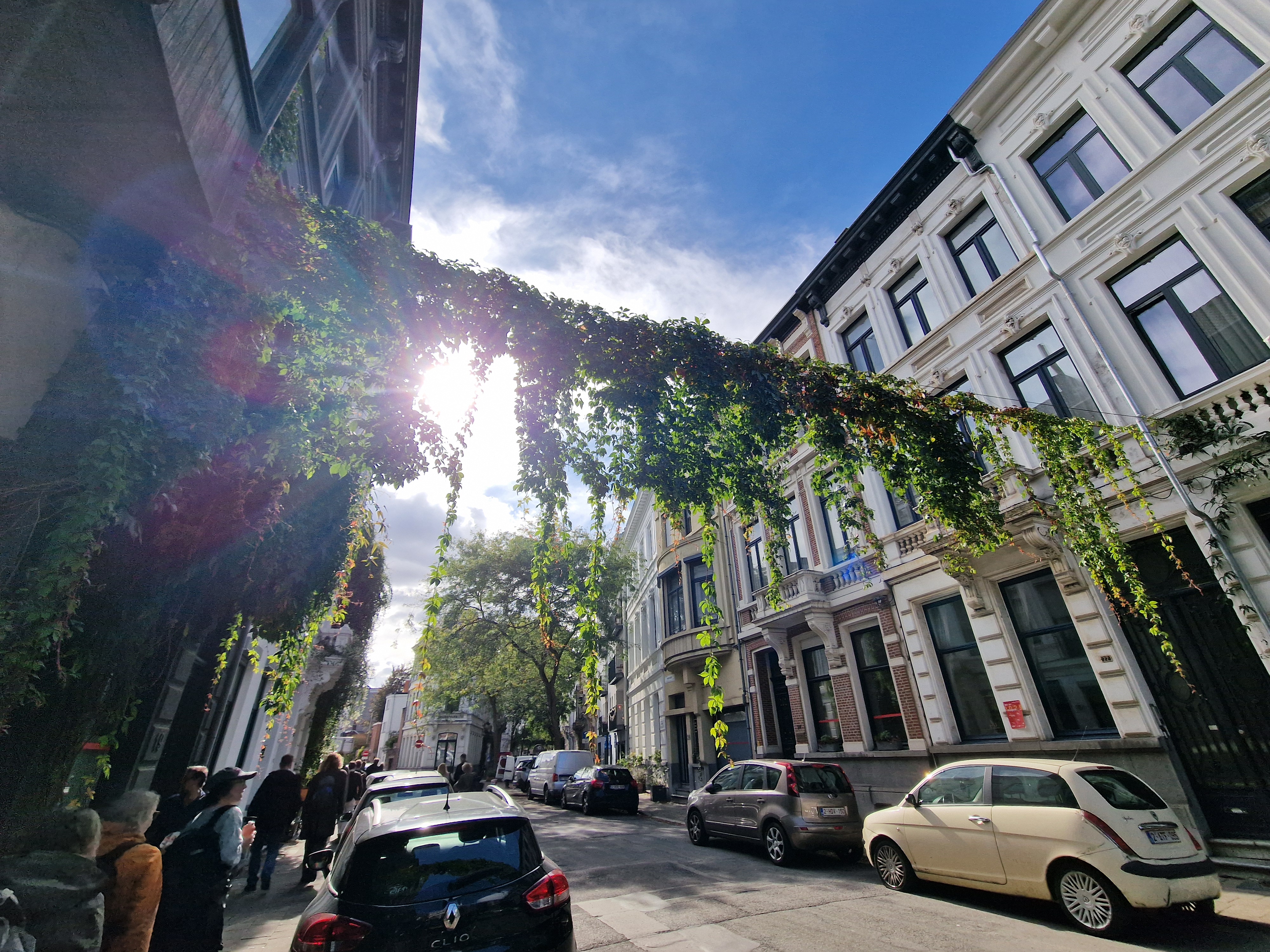
Some of the cases focus on climate change-induced effects, such as stormwater floods or droughts, while others tackle biodiversity loss, for example, supporting endangered species whose habitats are disappearing. But ecological challenges rarely come alone. In several of the cases, people feel disconnected from nature. We see things like landscape blindness (not noticing the nature that is there) and the loss of local knowledge, such as how rainwater can be captured and used wisely. Tackling the biodiversity loss thus needs to come as much from ecological decisions as from social action.
Each different case requires widely different nature-based solutions, reflecting the complexity and uniqueness of our urban areas. Across the demonstration cases, interventions range from greenifying streets, to planting zigzag clover to support an endangered moth, to vertical storm management, storing floodwater in aboveground measures. While some cases already have a clear plan and focus, others are still brainstorming options and are defining what they want to achieve.
Preparations: more than choosing solutions
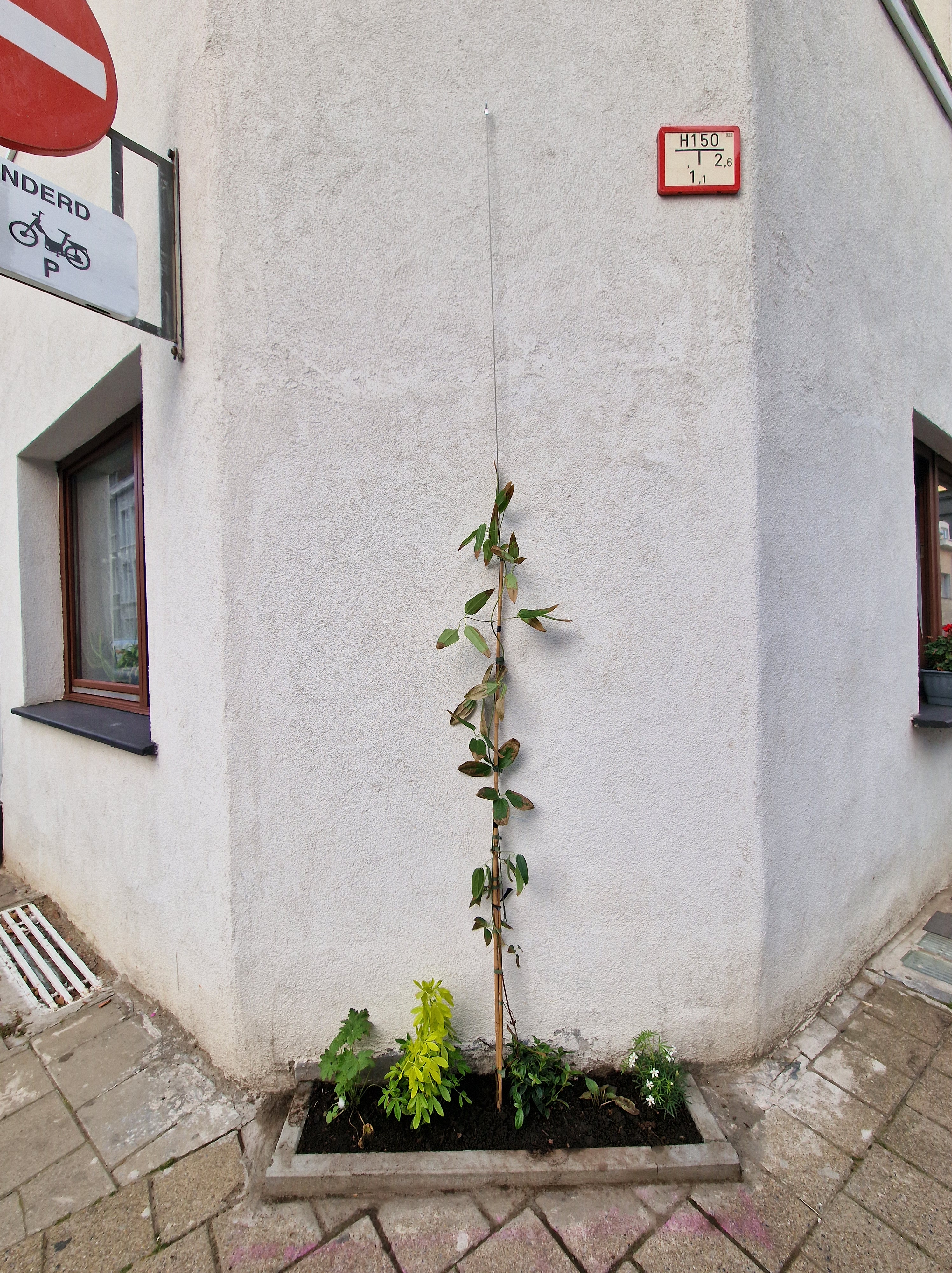
But planning nature-based solutions is not only about deciding what you want to implement. It is also about agreeing on:
- When to implement
- Where exactly implementations will take place
- How we will measure whether they work
That’s also where monitoring enters the picture, and that’s exactly where we take the wheel.
Monitoring
In most of the cases, there are two phases you go through when monitoring:
- Baseline monitoring before implementation (what is the situation right now?)
- Follow-up monitoring after implementation (what has changed?)
To know if these changes were indeed the effect of the interventions, you also need comparison areas:
- A negative control site: a similar area where nothing changes, and/or
- A positive control site: an area that already has the conditions we want to achieve
Part of the preparation work has been to map these control sites, but it’s also about deciding what we measure there. Across all cases, monitoring microclimate (both local temperature and humidity) is the main focus of interest, together with monitoring biodiversity (plants, insects), and sometimes soil health. While microclimate can be measured using sensors and soil health with soil samples, for biodiversity monitoring we need people, and that’s when social engagement becomes important.
Social engagement: turning monitoring into participation
INNATURE is not only about the ecological side: it’s also about making the local community feel involved and engaged with the nature in their surroundings. That’s why we have been carefully thinking about how monitoring can become a moment of connection.
In these cases, residents will be involved in measuring microclimate in these implementation and control sites, and in several cases also in backyards, with results visible on a digital platform. By seeing data change over time, such as seeing their own street getting cooler after greening, the impact becomes more tangible.
Simultaneously, this platform also supports biodiversity registration, not only during events like a bioblitz (where people try to document as many species as possible in a certain area), but also over the longer term. One idea we’re exploring is gamification: using gaming elements, such as receiving points when you register five species, to make participation fun and motivating. In this way, residents can become aware of the actual biodiversity that their neighbourhood harbours. They get curious about it, learn what species are called, and see it as something they care for.
Beyond microclimate and biodiversity, this platform could also become a space where people share experiences and observations about their neighbourhood, such as highlighting beautiful locations or reporting fly-tipping. In this way, the project can support nature stewardship and strengthen the feeling that urban nature is something shared and protected together.
So, what’s next?
Preparations: there’s more to it than you first see. We have our hands full with ordering sensors, meetings with each case to co-create and fine-tune our plans, and preparing upcoming site visits where sensors will be placed and monitoring will begin.
With five demonstration cases running in parallel, coordination is a project in itself, but it’s also one of the fun parts. With each case being unique and contributing its own insights, together they build a broader understanding of how nature-based solutions can support both biodiversity and belonging in the spaces where we live.
– To be continued! –


 The 3D lab