
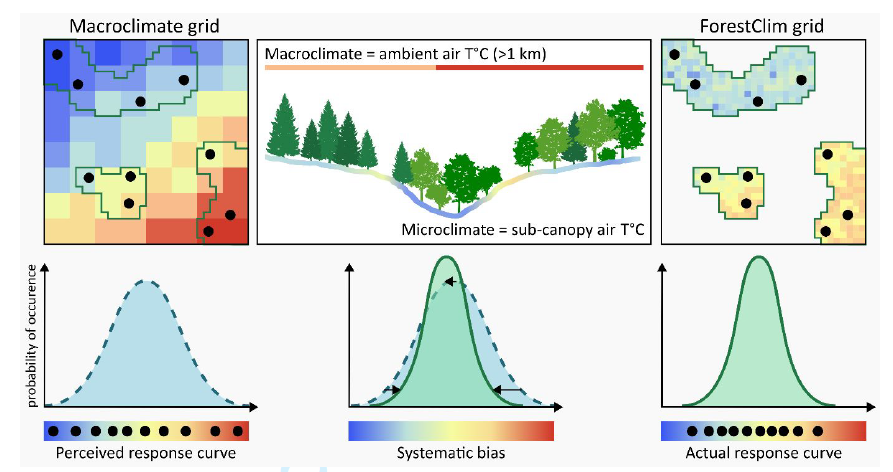
I might have mentioned this before*, but microclimate is crucial to improve our estimates of species distributions. As species are reacting to micro- rather than macroclimate, and both are at the local scale only very weakly correlated, ignoring microclimate could give highly erroneous species distribution estimates.
Now, these things are easy to say, of course, and easy to argue theoretically. It’s an other thing altogether to actually proof them with real data. There are increasingly many regional studies doing just that**, however not that many are around to say that microclimate also matters at the large scale!
There is an argument for the hypothesis that it wouldn’t matter: across a whole continent like Europe, climatic gradients are so vast, that the difference between macro- and microclimate could perhaps in theory be overwhelmed by that macroclimatic gradient. That would make using microclimate data obsolete.
Nice try, paragraph just above, but the news is out that it actually DOES matter, even at that scale! That news comes in the shape of a new paper by lab member and SoilTemp forest data cruncher Stef Haesen, just published in Ecology Letters.
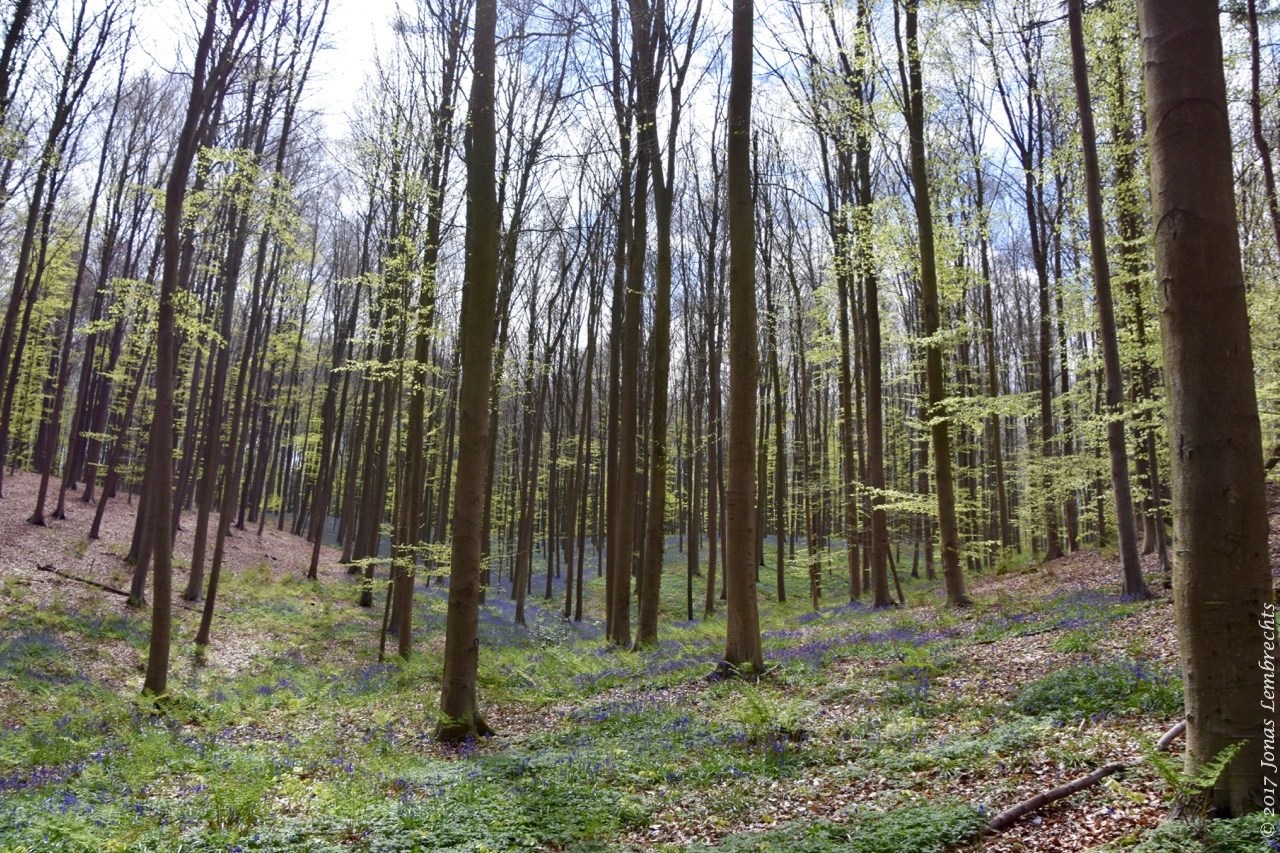
What he did was comparing the performance of species distribution models (SDMs) built with micro- and macroclimate data. That microclimate data came from ForestClim, the European-wide high-resolution gridded microclimate product of forest understory temperatures (which he ALSO made, what a hero!).
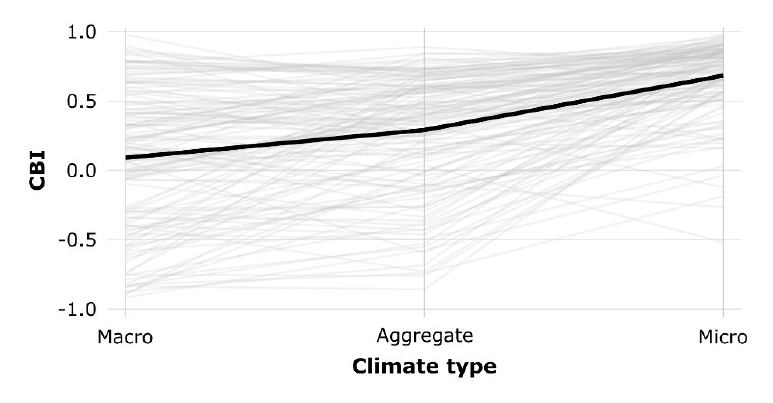
The Ecology Letters paper now elegantly shows that microclimate-based SDMs at high spatial resolution outperformed models using both macroclimate, and microclimate data at coarser resolution. Additionally, macroclimate-based models introduced a systematic bias in modelled species response curves, which could result in erroneous range shift predictions.
In practice, the macroclimate models were – as predicted – unable to identify warm and cold refugia at the range edges of species distributions, the areas were microclimate was likely to be most important.
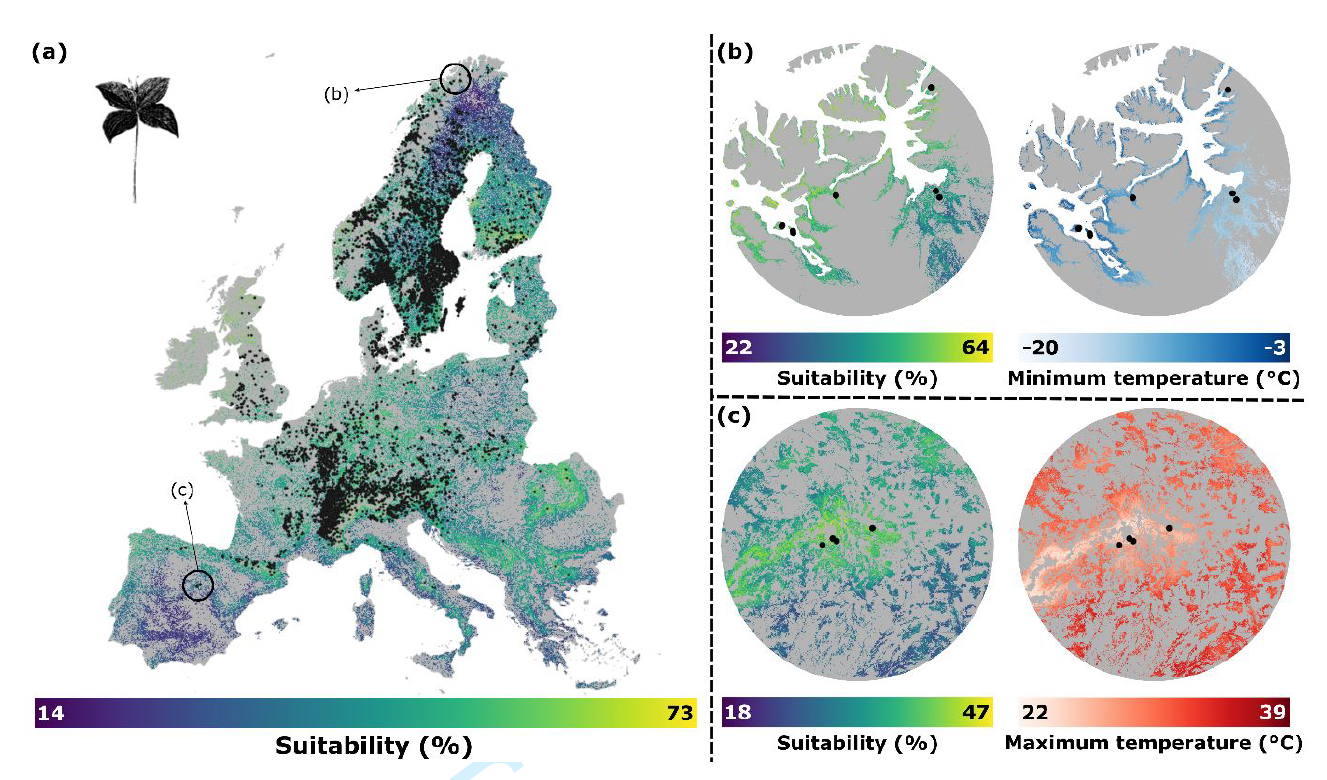
These findings elegantly show that, yes, microclimate is critical for SDMs, even at the continental scale. More importantly, perhaps, is the fact that if we want to use such models to find out where to conserve biodiversity, microclimate data is even more crucial: conservation often targets species at the edge of their distribution (refugia like these identified in the paper are increasingly at the forefront of conservation), where macroclimate-based models are thus performing the worst.

* Just joking; I effectively mention this every week or so! Even more, already in my PhD I had a whole paper dedicated to this point!
** Yes, even I wrote a bunch, like this one!





 The 3D lab