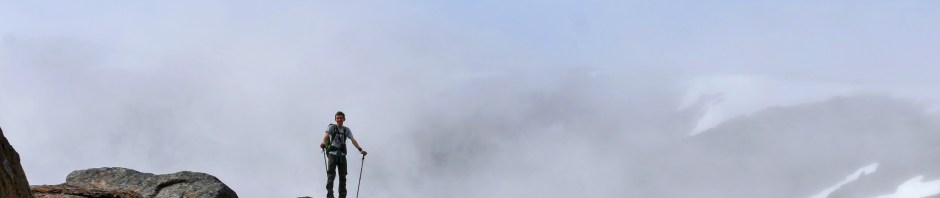
We had stumbled upon a great treasure, when our colleague Keith, from Abisko in northern Sweden, found an old research paper from the 1950s written by a botanist called Olav Gjaerevoll. This Olav had spent several summers in the 1940s exploring the mountainsides in the northern Scandes around Abisko, during those times when the Kiruna-Narvik railroad line was transporting tons of iron ore to satisfy the ever-iron-hungry Nazi-Germany war machine.
Mr. Gjaerevoll, a passionate botanist, had fallen in love with the snowbed vegetation of the northern Scandinavian mountains. He meticulously classified the different snowbed vegetation types and their association with soil pH and soil moisture.
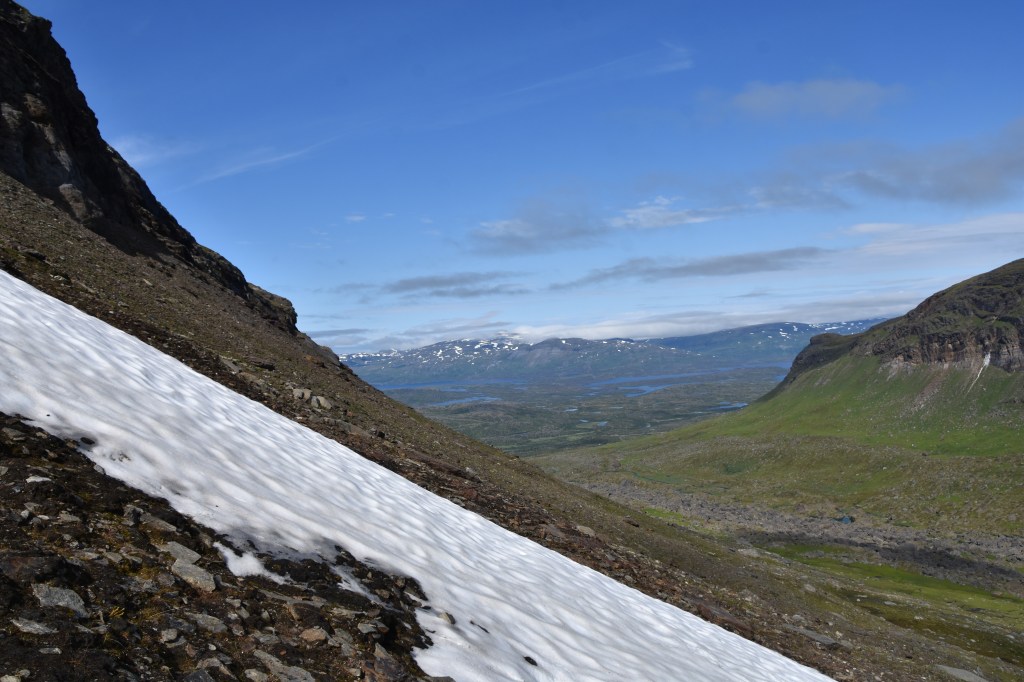
Since the 1940s, much has changed. The railroad line still transports tons of iron ore, but the climate in the region has substantially warmed and become more erratic. We became curious about how a resurvey of those snowbeds from the 1940s would look now and how the communities might have changed.
Of course, locating the exact plots was not feasible. Gjaerevoll had provided us with mountain names, orientations, and heights, but that often left us with several snowbeds to choose from. Moreover, he didn’t describe his sampling scheme in enough detail to locate the exact plots precisely. Nevertheless, we were determined to get as close as possible and uncover an interesting story.
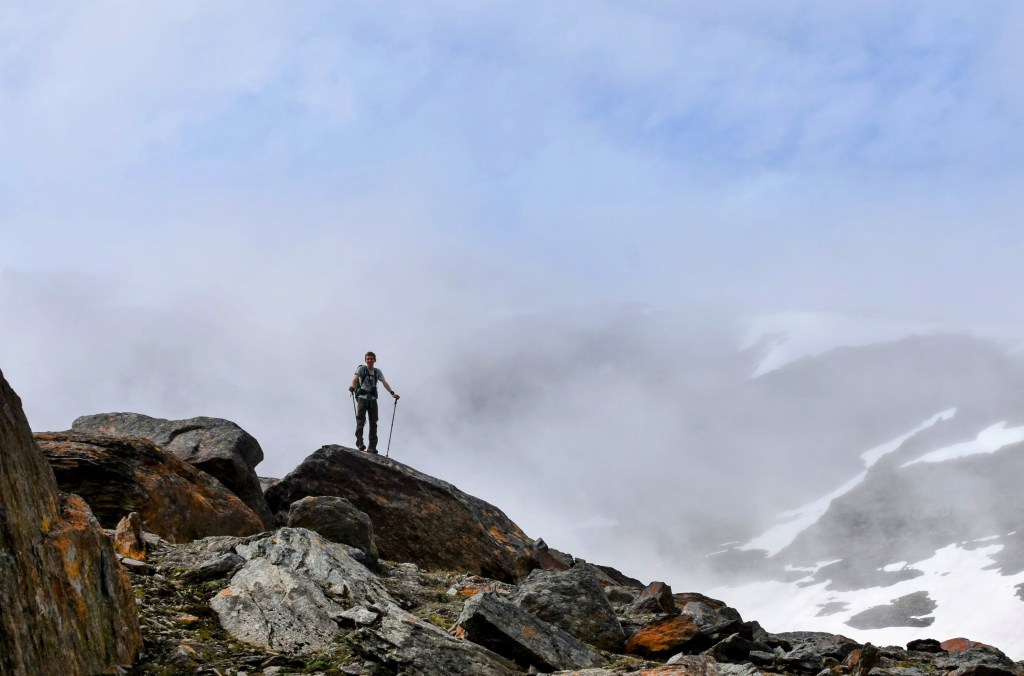
Thus, we embarked on a journey following the faded tracks of this mid-twentieth-century botanist. Our first target was an easy one – a snowbed right underneath the touristic chair lift on Mount Nuolja, next to Abisko. For our second day of adventure, we aimed a bit higher. We noticed that Olav Gjaerevoll had visited a few snowbeds high up on the flanks of the Kärkevagge-valley, the valley of the ‘lake of the trolls’, or ‘Trollsjön’. This trail was highly popular among tourists and led to a beautiful lake at the end of a gentle slope, surrounded by steep mountains on all sides but the north.


However, we didn’t just want to follow the tourist track to the lake. Our goal was to reach the steep slopes where the winter snow still blanketed the rocky flanks. Just before reaching the lake, we thus veered off track, ventured into the valley, crossed the stream barefoot, and ascended the steep slopes on the other side.

After a brisk climb and some contemplation on ‘what would Gjaerevoll do’, we discovered a lovely little snowbed. We got down close to the ground, just a few centimeters from the snow, to identify the diverse array of centimeter-sized plants that were flourishing there. The sight was astounding – so many Saxifragas, funny little sedges and Luzulas, such pretty millimeter-sized flowers! It was a feast for the eyes!

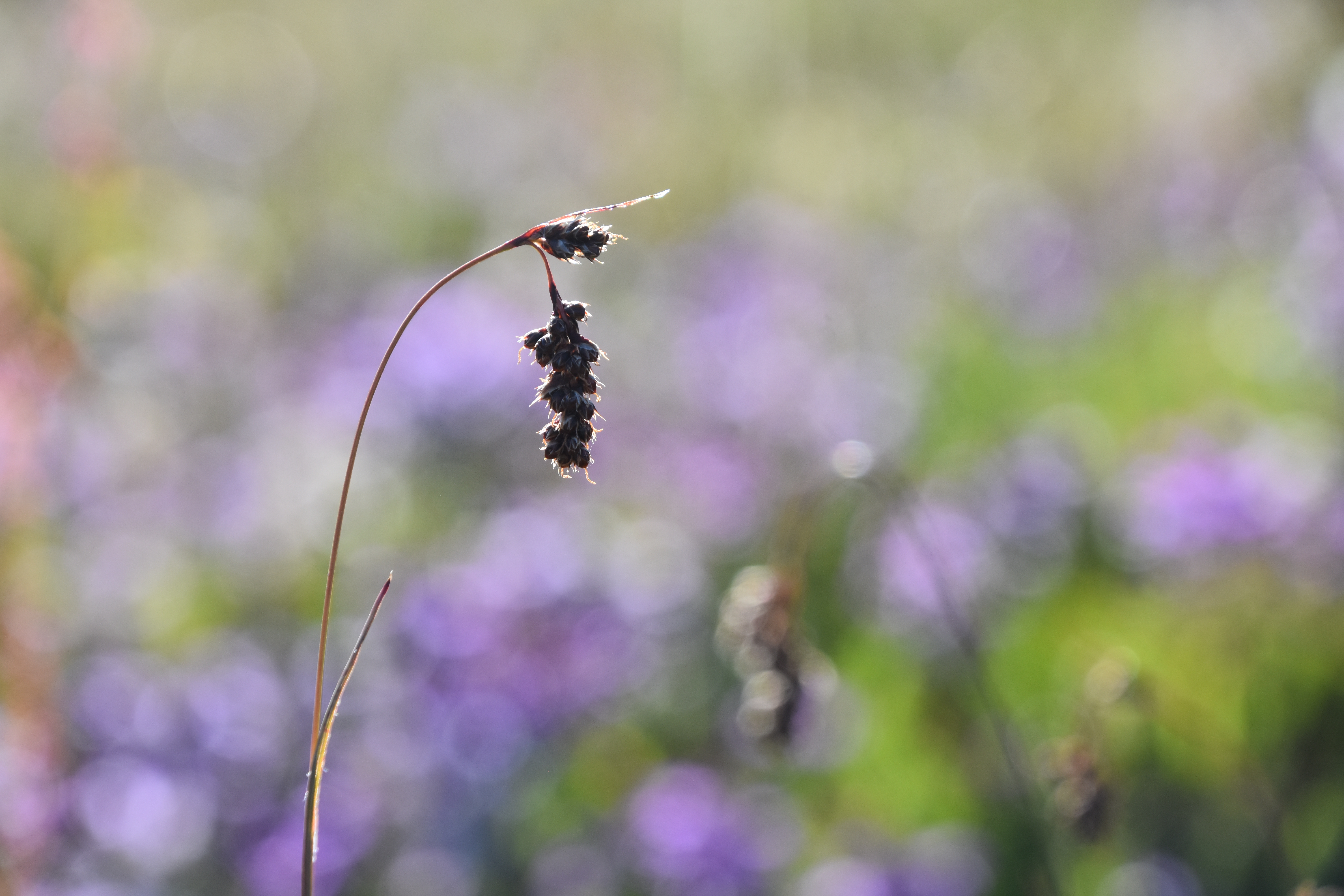

The scientific findings we could make up there will have be the subject of another blog post, as well as a master thesis by our dedicated ‘Olav’ of the present, Brent. Yet the journey had clearly started in a sufficiently epic manner, promising a great project ahead of us!


 The 3D lab
How interesting. I’m looking forward to the next post on this subject.
a very interesting description of your discovery and adventure, I’m looking forward to the sequel
Geweldig !!!
Verstuurd vanaf mijn iPhone
>
Love the (hi)story, and looking forward to the outcomes of your quest! In the meanwhile, just a tiny remark that the moss heather is actually Cassiope hypnoides, not tetragona 😉 Keep up the great work!
Ah damnit, I was too fast there! Don’t think we have been classifying it as tetragona in our surveys up till now 😉